History · to about 1020
Before the castle
The family’s earliest record, before the castle was built
Every long family history begins somewhere. For this one, the names reach back beyond the castle to the last centuries of Roman Gaul.
Guntram and Lanzelin
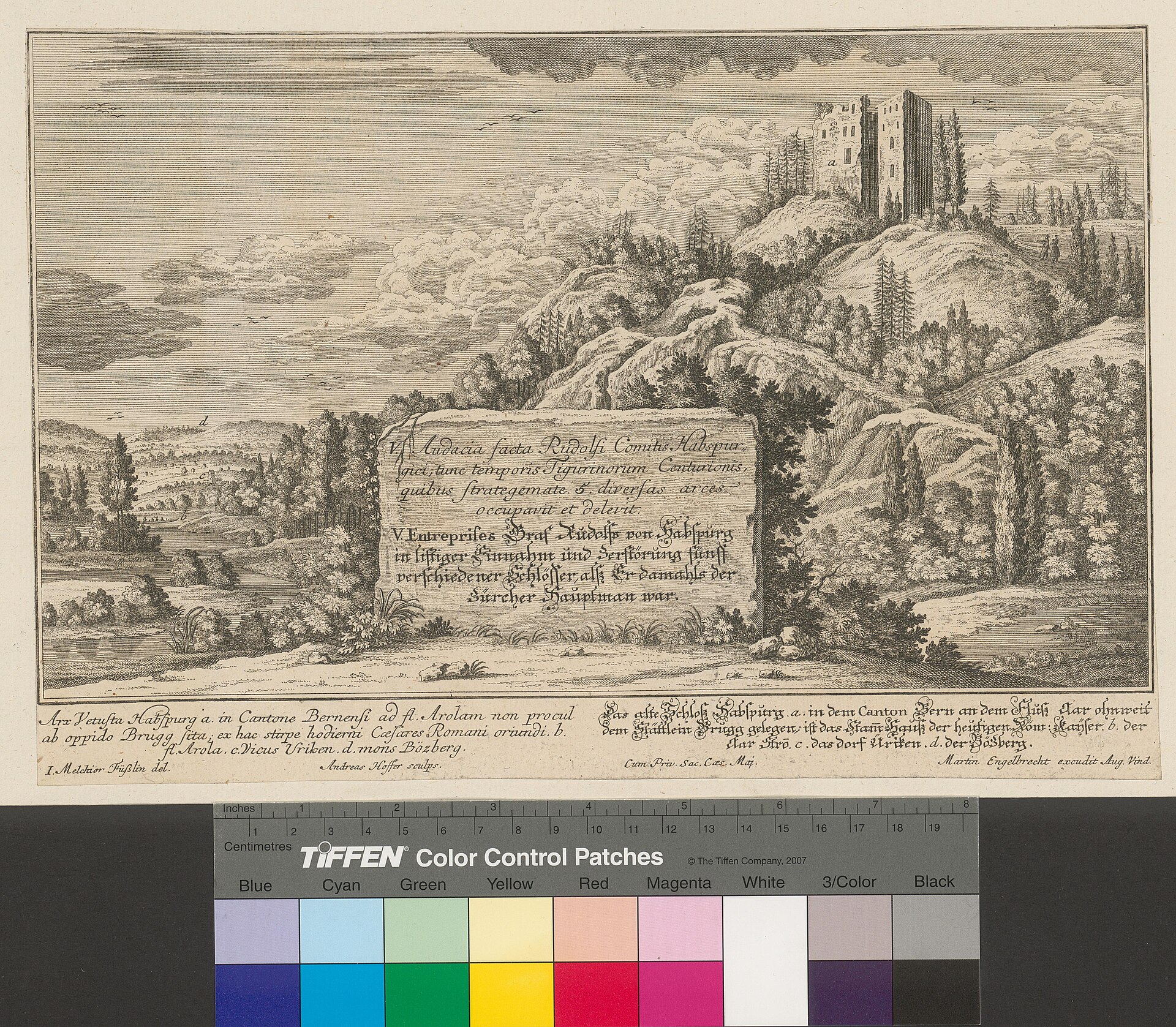
The earliest people the record will carry are Guntram the Rich, who appears in the tenth century, and his son Lanzelin, who died about 991. Lanzelin’s sons are the men who raised the castle. Everything from Lanzelin forward stands on documents.
Behind Lanzelin the family record runs back nineteen further generations, to a Ferreolus born about 390 in Gallo-Roman Gaul. These generations come to us as the early family set them down; beyond that account, no records of them are known.
The document at the root of everything
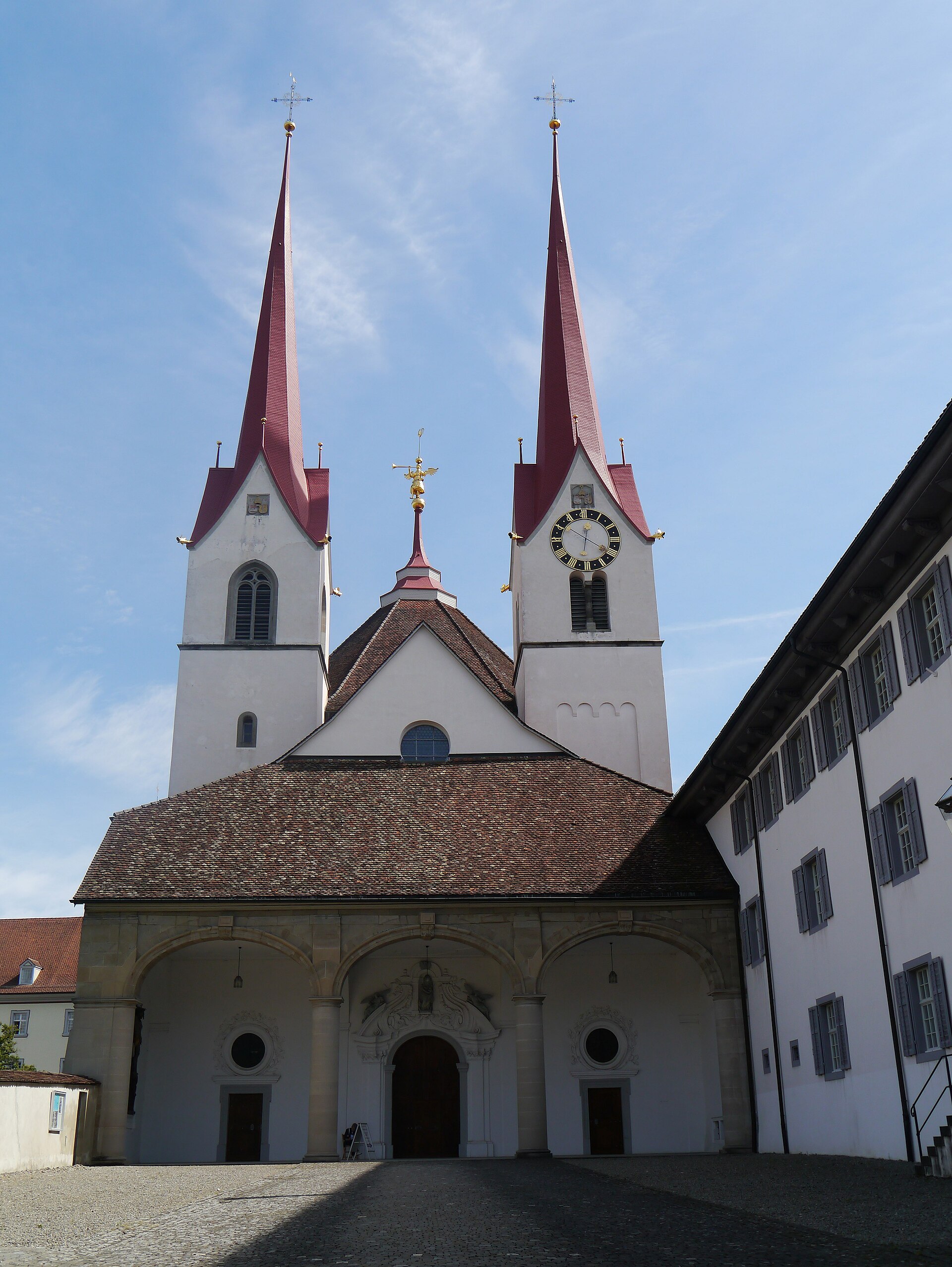
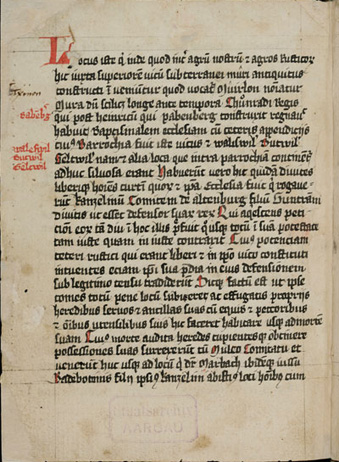
Almost all of what is known about the first Habsburgs comes from a single source: the Acta Murensia, the house chronicle of Muri Abbey, written at the abbey around the middle of the twelfth century — a hundred years and more after the events it describes.
That one document is doing an enormous amount of work. It is the reason we can name Radbot and Ita at all.
Why keep the earlier names at all
Because they are part of the family’s own account of itself. The early names are kept, set out above the line that follows.
What they are is a tradition: a chain of names carried down the generations and written out with care. It is worth keeping.
- Ancestry
The early record set out in full, above the line that follows. - The castle and the county
What Lanzelin’s sons built, and the name that came out of it.
Sources
- Acta Murensia, the house chronicle of Muri Abbey, twelfth century. Staatsarchiv des Kantons Aargau.
- Martyn Rady, The Habsburgs: To Rule the World (Basic Books, 2020), chapter 1.
- Peter H. Wilson, The Holy Roman Empire: A Thousand Years of Europe’s History (Allen Lane, 2016), on comital families and the written record.