The long answer
Was Charles V the first European?
A good question, a real argument, and one objection nobody can get round
People have been comparing Charles V's empire to the European Union for the better part of a century. Serious historians make the comparison. So does a prize awarded at the monastery where he died. So did a member of this family, at length and in print.
The comparison is worth making, and it does not survive being pushed. This page sets out both halves properly, because the honest version is more interesting than the flattering one — and, unlike the flattering one, it cannot be knocked down.
The case for
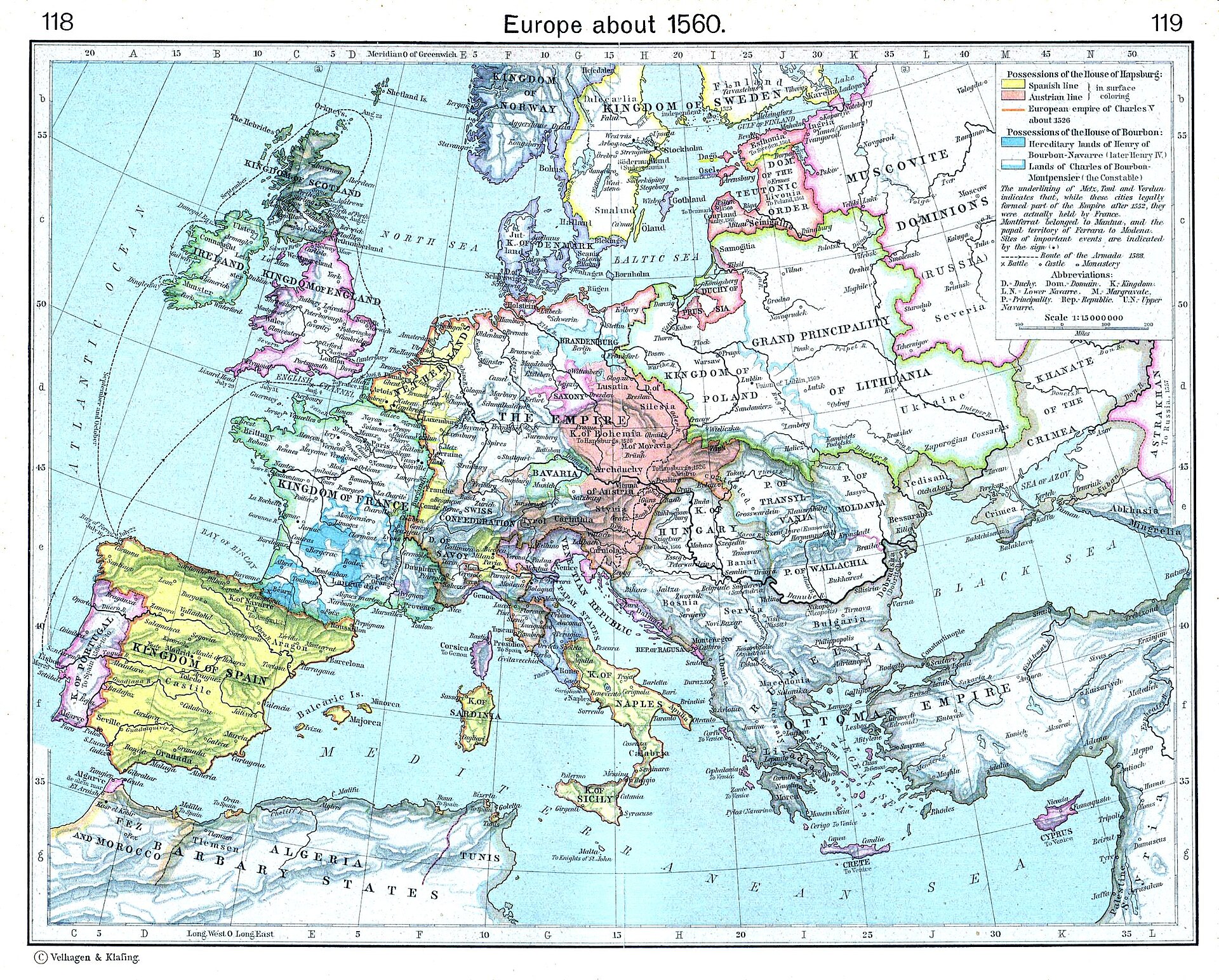
Start with the shape of the thing. Charles ruled a territory that was multilingual, multi-legal and genuinely supranational, and he ruled it without trying to flatten any of that.
The scholarly frame is J. H. Elliott's, from a 1992 essay that reorganised the whole subject. Most early modern European states, Elliott argued, were composite monarchies — territories joined under one ruler while keeping their own laws, institutions, privileges and often languages. Some were absorbed into the senior partner. Others were held aeque principaliter: each governed as though the ruler were sovereign of it alone. The Habsburg monarchy is the great example of the second kind.
H. G. Koenigsberger developed the related idea of monarchies that governed with representative institutions rather than over them.
For a modern reader the resonance is immediate. One ruler. Many peoples. Many languages. Many legal systems. No attempt to abolish local law. Government conducted by negotiating with provincial assemblies about money and troops.
The institutions, with their dates
The collateral councils, 1 October 1531. Council of State, Privy Council, Council of Finances — a standing executive for the Low Countries, distinct from the person of the ruler.
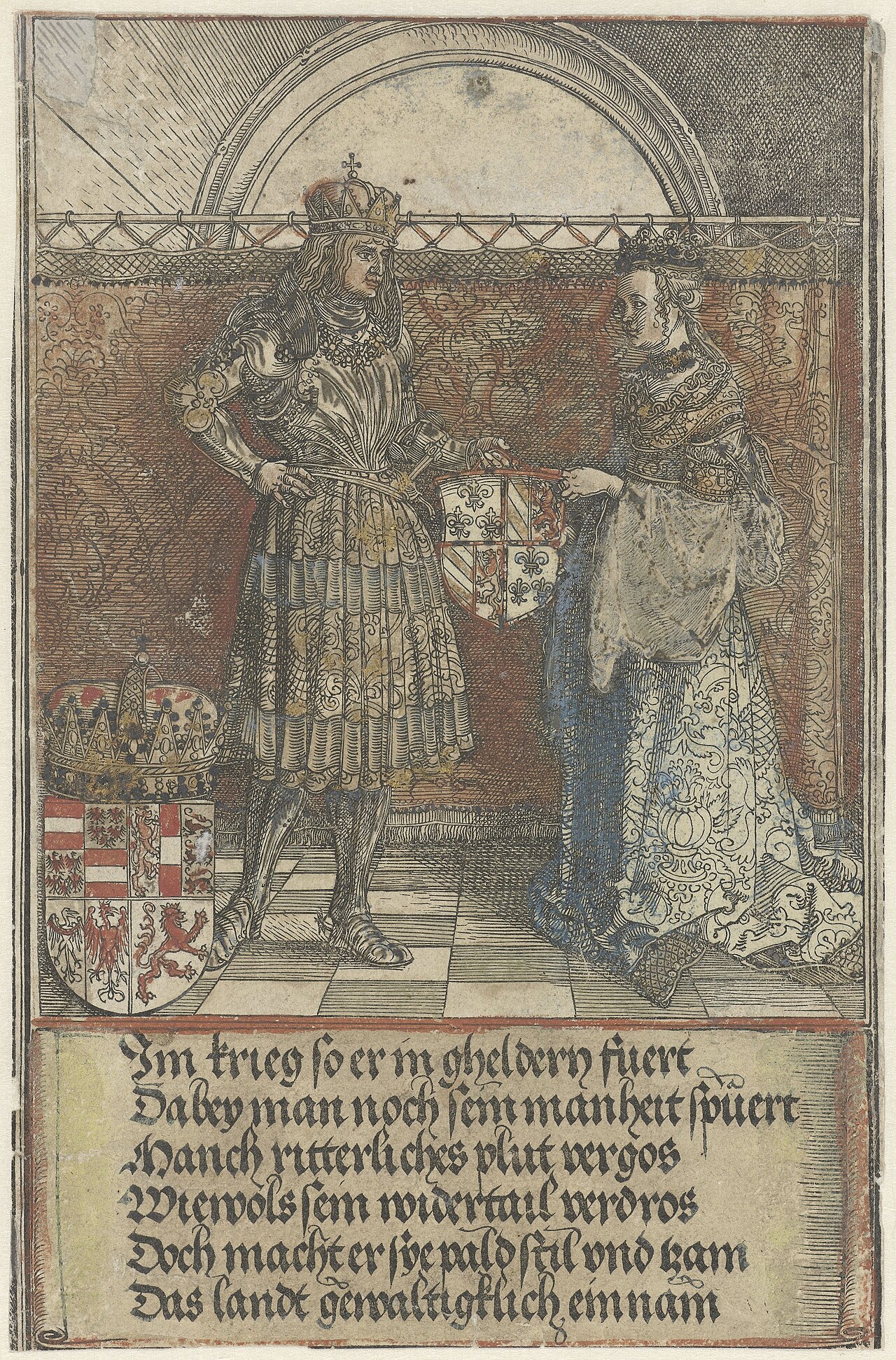
The Transaction of Augsburg, 26 June 1548. The Habsburg Low Countries grouped into the Burgundian Circle. For the first time there was an administration whose jurisdiction was "the Netherlands" — a supranational tier sitting above seventeen distinct provinces.
The Pragmatic Sanction, 4 November 1549. The Seventeen Provinces declared forever one and indivisible, while retaining, on the face of the document, each province's customs, laws and forms of government. A single legal personality preserving internal diversity is a federal idea in all but name.
Government by consultation. Taxes and troops required the assent of the provincial States and the States-General. A ruler who wanted money had to ask for it.
The Order of the Golden Fleece, founded 1430, its sovereignty passing to the Habsburgs: a single chivalric body binding nobles from Burgundy, the Netherlands, Spain, Italy, Germany and Franche-Comté, with its own chapters, oaths and jurisdiction. A transnational elite with real institutions — though it should not be pressed too hard, because it was an order of noblemen and not a representative body of any kind.
And there is the intellectual furniture of the court, which is not nothing. Erasmus, who had taught the young Charles, dedicated the Institutio principis christiani to him in 1516 — a handbook of government built on peace, education and the good of the governed rather than on conquest. Mercurino Gattinara, Grand Chancellor from 1518 to 1530, pressed a programme of universal monarchy drawing on Dante: a single Christian order under one head.
Who actually makes this argument
It matters to say, because arguments have owners.
The fullest version was made by Otto von Habsburg, in Die Reichsidee (1986): that the supranational imperial idea was a forerunner of European integration. He spent much of his political life on that proposition, as a member of the European Parliament. It is his argument, honestly made, and this page attributes it to him rather than presenting it as a neutral finding — partly because that is more accurate, and partly because it is more persuasive.
He was also, of course, an interested party. He was arguing for his own family's place in a European story while sitting in a European institution. That does not make him wrong. It does mean the reader should be told who is speaking.
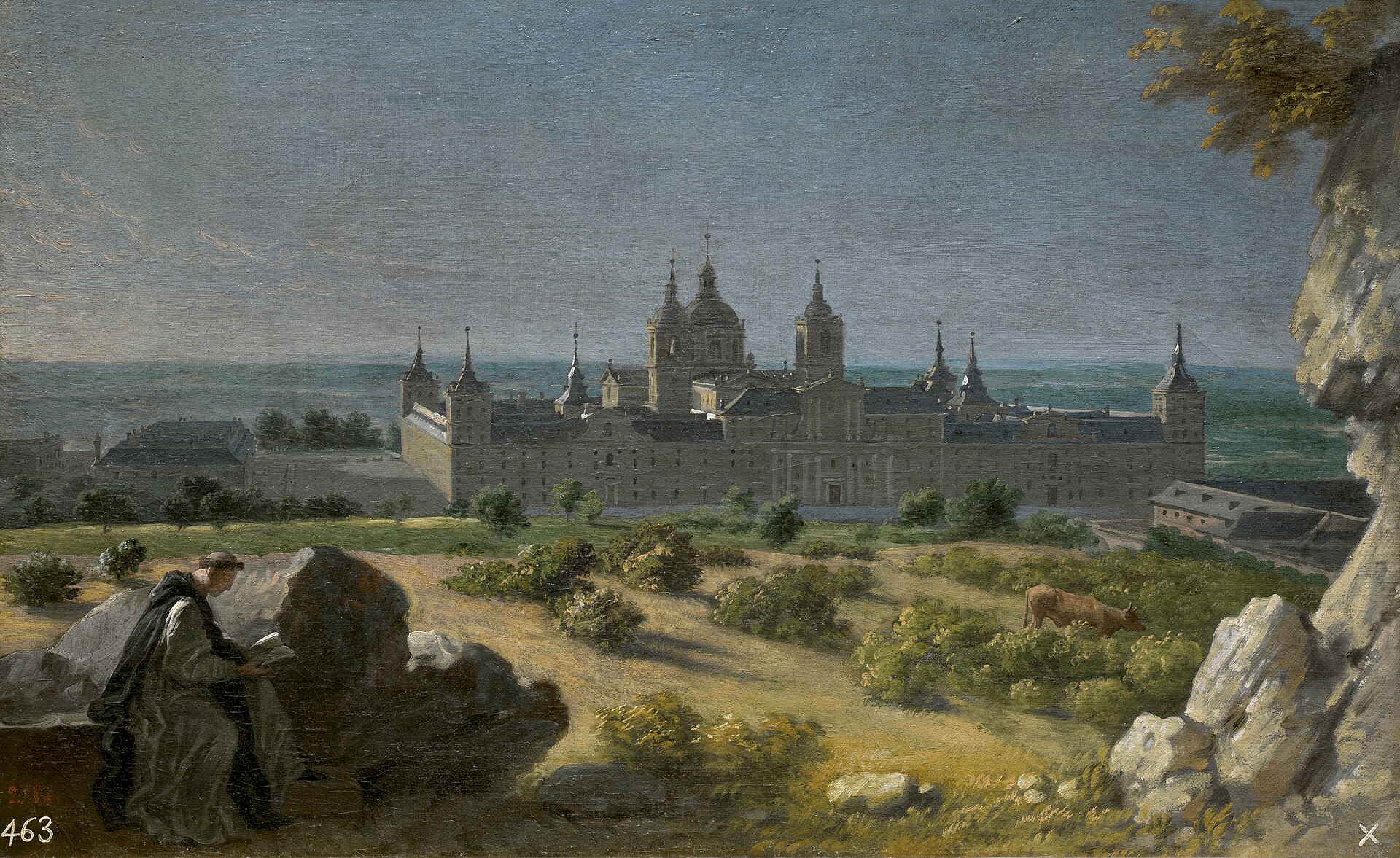
There is an institutional version too. Since 1995 the European Charles V Prize has been awarded at Yuste — the monastery he retired to — for contributions to European integration. Its laureates include Jacques Delors, Mikhail Gorbachev, Simone Veil, Felipe González, Javier Solana, Angela Merkel and others. Whatever one concludes about the history, the comparison has been made at that level, in public, ever since.
The case against
Now the other side, and it is heavier.
Nobody consented. Charles ruled by inheritance, marriage and conquest. No territory chose to join. The provinces of the Netherlands were assembled by purchase, by treaty after war, and by inheritance — not by anything resembling an accession negotiation.
And nobody could leave. This is the decisive objection and it has a date and a place. Ghent refused a tax in 1539. In February 1540 Charles entered his own birthplace with an army, executed the ringleaders, fined the city, took its weapons and, by the Concessio Carolina, abolished the liberties it had held since the Middle Ages. The Castilian towns had made the same argument in 1521 and had been broken for it at Villalar.
A union you cannot leave is not the ancestor of a union you can.
Ghent, 1540, against Article 50 of the Treaty on European UnionIt rested on enforced religious uniformity. The modern European settlement rests on pluralism. Charles's rested on one confession wherever he had the power to require it, and he accepted coexistence only at Augsburg in 1555, after military defeat, and would not sign it.
It was also a colonial empire. The encomienda, the silver of Potosí worked under the mita, the asiento. The New Laws of 1542 were rolled back under colonist pressure. The Valladolid debate of 1550–51 happened at Charles's own instance, which is to his credit, and changed very little, which is not. A page that made the European case without this would be presenting half a subject.
And it was not a state. No common citizenship. No common law. No common budget. No common currency. No legal personality independent of the man. At his abdication in 1555–56 it split cleanly in two. A structure that cannot outlive its ruler is not a proto-federation; it is an accumulation.
The historians who say so, by name
James D. Tracy (Emperor Charles V, Impresario of War, Cambridge, 2002) reads the reign through the organisation and financing of war, not through any European project.
Geoffrey Parker (Emperor: A New Life of Charles V, Yale, 2019) gives a ruler driven by dynastic obligation and crusading duty, not by a conception of European union.
Brendan Simms (Europe: The Struggle for Supremacy, 2013) reads the period as a contest for hegemony in which Habsburg universalism provoked the balance-of-power politics that made modern Europe.
H. G. Koenigsberger stressed that composite monarchy was a practical accommodation to the impossibility of ruling centrally — not a principled federalism.
One more thing, and it is the most interesting
The European Charles V is himself partly a modern invention.
C. Scott Dixon has traced how the twentieth century recruited him — the great commemorations of 1958 and 2000 fell in decades when European integration was the live political question, and the Charles V those exhibitions presented was shaped accordingly.
That does not make the comparison false. It means it has a history of its own, and that the honest thing is to present it as an interpretation with a date on it rather than as something discovered in an archive.
Where this site lands
- That his empire was multilingual, multi-legal and supranational — accepted.
- That it was governed substantially by consultation — accepted, with the qualification that the consultation was about money and men, not about policy.
- That it contained real supranational institutions — accepted.
- That it is an illuminating analogy for the European Union — defensible, and made by serious people.
- That it was an ancestor or forerunner of the European Union in any institutional sense — no. No consent, no exit, no common citizenship, and it did not outlive him.
The comparison is worth making because it shows how old the European question is — and how much turns on the answers.
The sentence this site is willing to defendWhat would change the verdict is easy to state: a peer-reviewed study establishing documented institutional continuity between any Habsburg body and a modern European institution. No scholar presently claims one.
- Back to Charles V The life itself — Ghent, the inheritance, the abdication and Yuste.
- The present and the future Where the family stands today, and what it thinks the past is for.
- The Quiet Centuries What happened in the Low Countries after the empire came apart.
Where this page comes from
- J. H. Elliott, "A Europe of Composite Monarchies", Past & Present 137 (1992), 48–71.
- H. G. Koenigsberger, Monarchies, States Generals and Parliaments (Cambridge, 2001).
- Geoffrey Parker, Emperor: A New Life of Charles V (Yale, 2019).
- James D. Tracy, Emperor Charles V, Impresario of War (Cambridge, 2002).
- Brendan Simms, Europe: The Struggle for Supremacy (Allen Lane, 2013).
- C. Scott Dixon, "Charles V and the Historians", German History.
- Otto von Habsburg, Die Reichsidee (Amalthea, 1986) — the argument, attributed to the person who made it.
- Erasmus, Institutio principis christiani (1516).