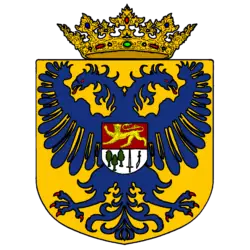
A thousand years, in eight pieces
History
From a ridge above the Aare to a family living now
Read it straight through and it is one story. Read it in periods and it is eight different families, each of which would have found the next one unrecognisable. Take whichever route suits you — the periods are below, and the continuous account follows them.
 to 1020
Before the castle
The family’s earliest record, from Ferreolus to Lanzelin.
 1020 – 1273
The castle and the county
Two and a half centuries as counts in the Aargau, and the name that came from the castle.
 1273 – 1438
Kings of the Romans
A crown in the west, a country in the east, and a homeland lost in between.
 1438 – 1519
The Burgundian inheritance
Two marriages, eighty years, and half of Europe. Everything here runs through this.
 1519 – 1558
The empire that could not be governed
Forty years of holding together something too large to hold — and then stopping.
 1556 – 1700
Spain, the Netherlands and the parting
The half of the house this family comes from: Philip II, John of Austria and Lepanto.
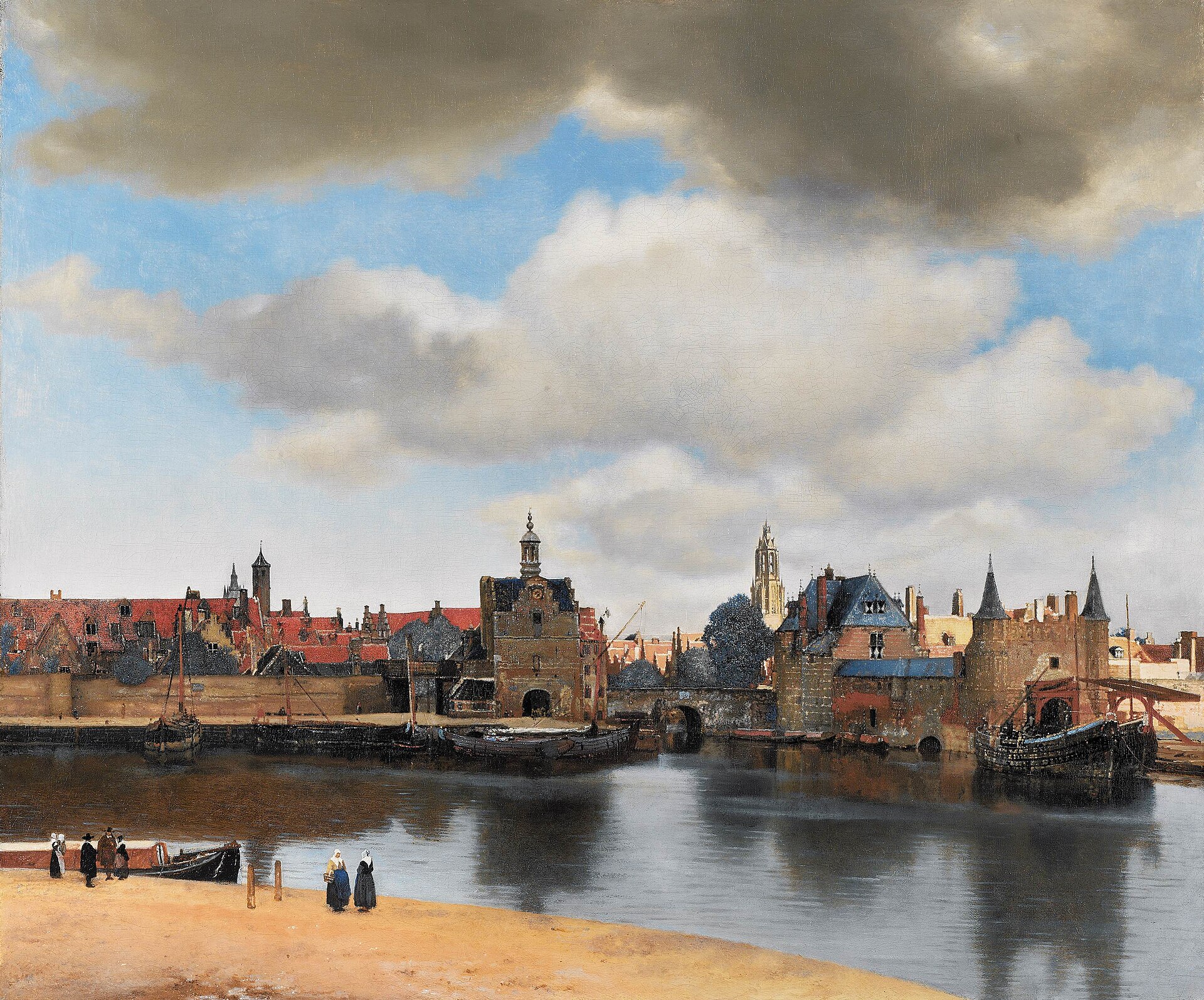 1578 – 1900
The Quiet Centuries
The Dutch Republic, and the river country the family made its home.
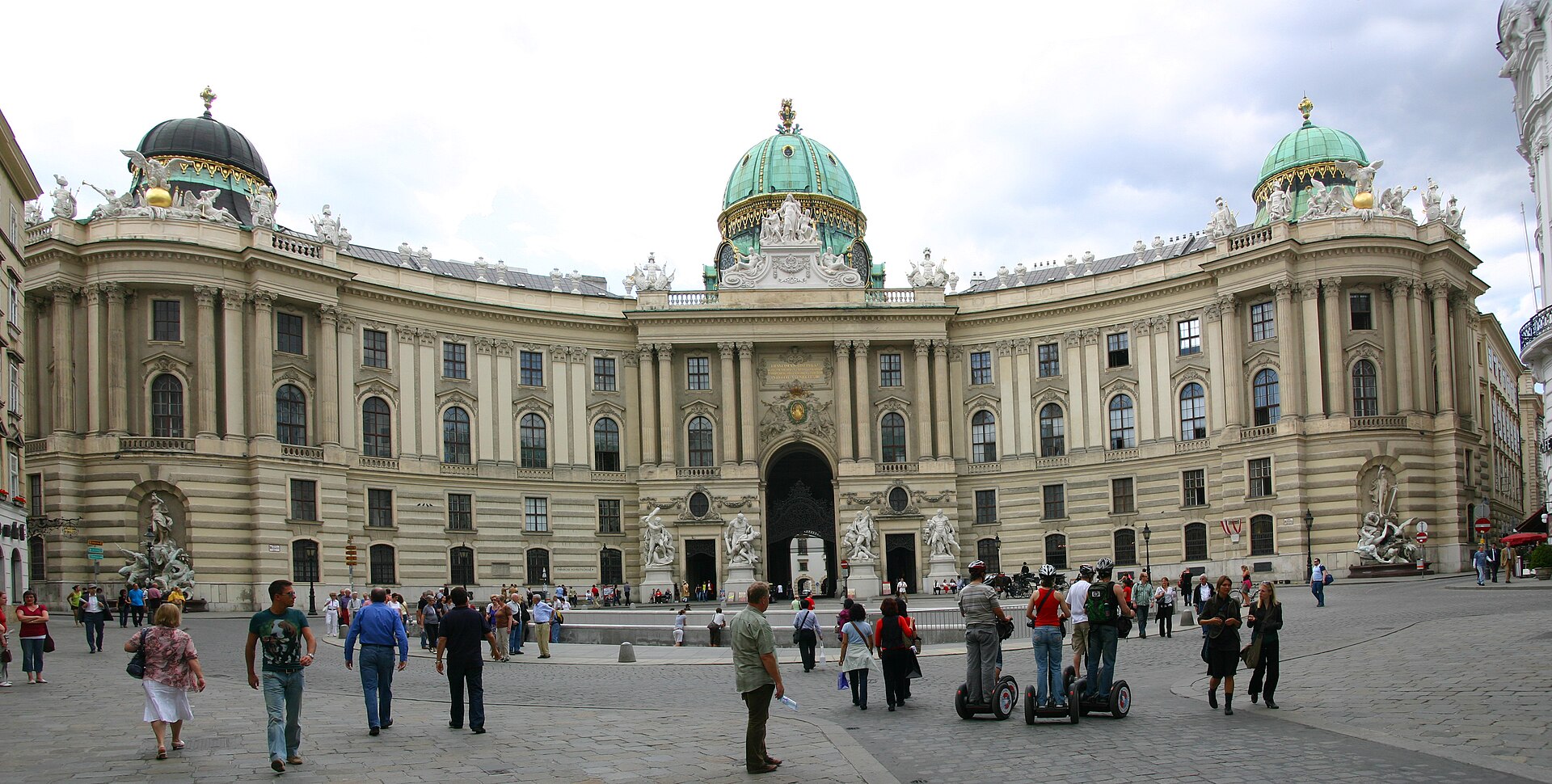 1740 –
The Habsburg-Lorraine line
The Austrian thread, covered in outline and with respect. Two threads, one ancient name.
The whole span, in one read
Below this note the continuous account runs from the tenth century to the present day, without stopping for period breaks. It covers the same ground as the eight pages above and is meant to be read rather than browsed.
A family of counts in a valley in what is now Switzerland took its name from its castle around 1100. Four hundred years later its head ruled more of Europe, and of the world beyond Europe, than anyone since Charlemagne. Four hundred years after that, the same family was living in the Low Countries, as it had for centuries.
That is the whole shape of it. What follows is the same story at walking pace.
Before the name
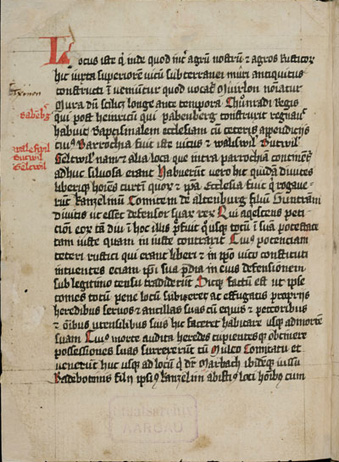
The family's own earliest record runs from Ferreolus, born about 390, down to Lanzelin, who died in 991 — nineteen generations before the castle was built. These generations come to us as the early family set them down; beyond that account, no records of them are known.
It comes to us through the Acta Murensia, written at Muri Abbey around 1140, the document at the root of everything known about the first Habsburgs.
The Cabinet has more on why the Acta was written, and it is not the reason you would expect.
The Aargau
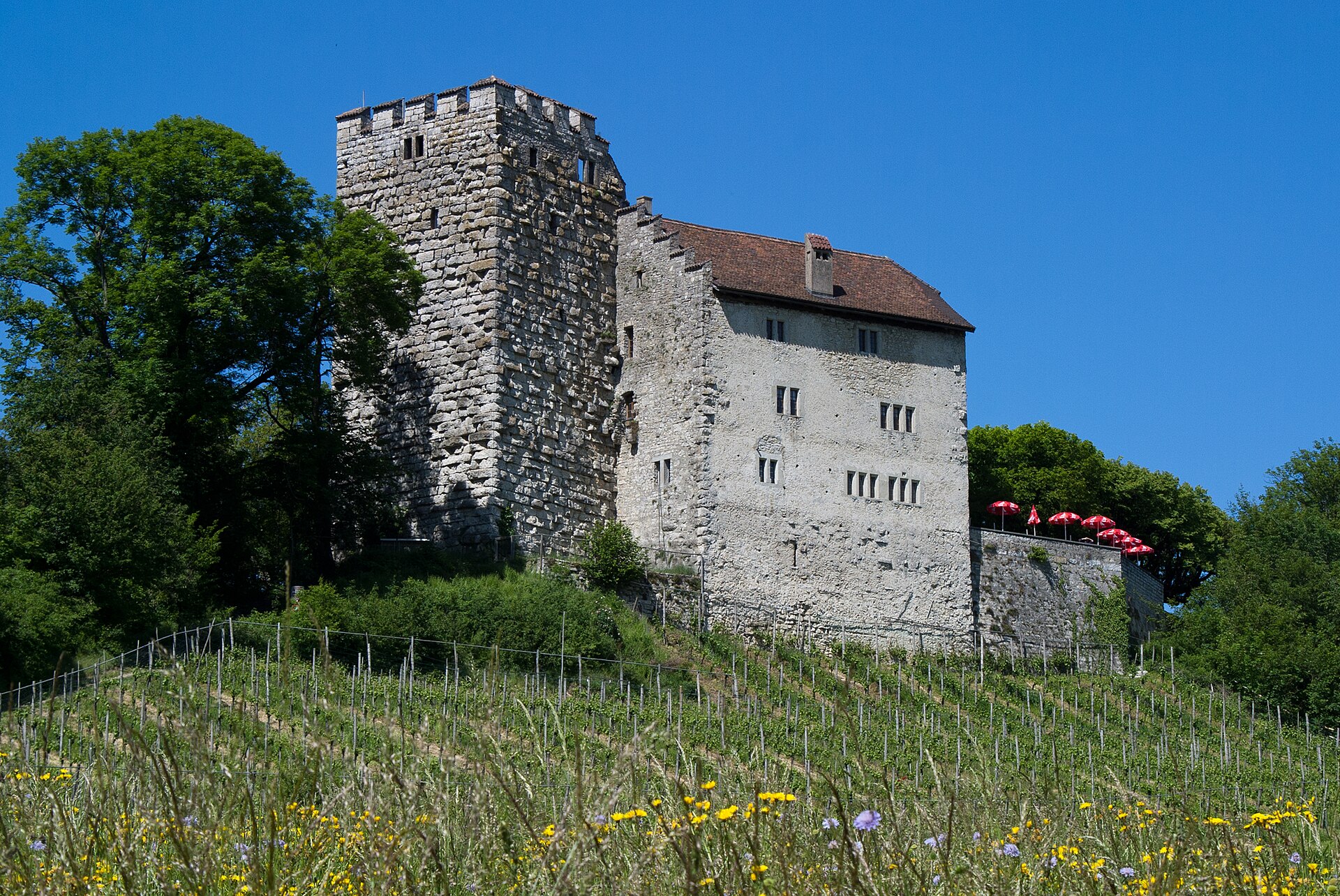
Around 1020 or 1030, a man named Radbot raised a stone castle on a ridge above the river Aare, in the Aargau. Within a few years he and his wife Ita had founded an abbey at Muri, a few hours south; its church was consecrated in 1064. The castle and the abbey are the two fixed points of the family's first two centuries — one for holding the valley, one for burying its dead and writing things down.
From about 1100 the family took the castle's name. What the castle's own name means has never been settled: it may be the hawk's castle, or the castle at the ford. Historians cannot confirm which, and neither can we.
The Cabinet sets out both readings, and why the argument is more interesting than it sounds.
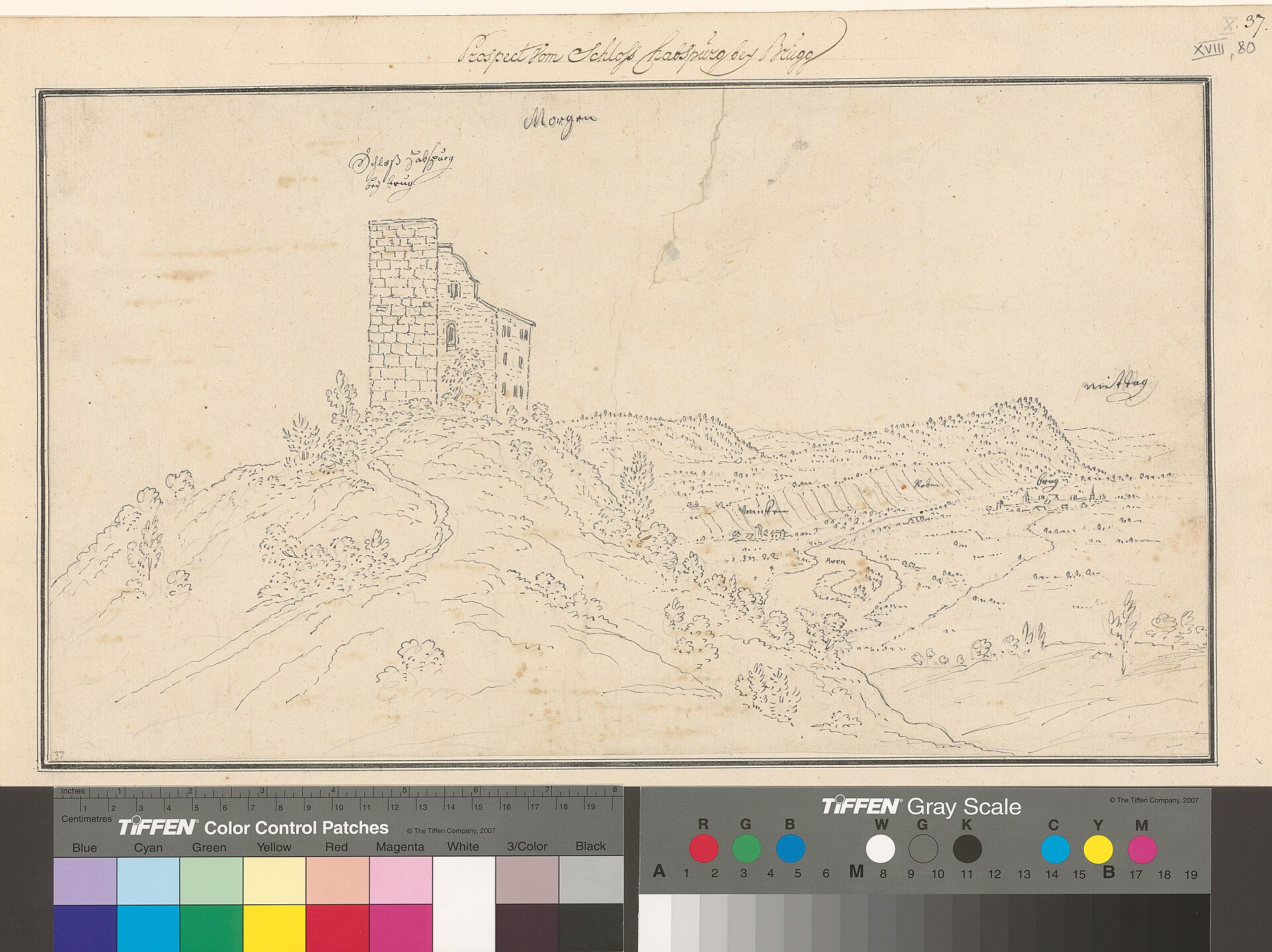
The family did not stay in the castle. Around 1220 to 1230 the counts moved down to Brugg, the town they had founded in the valley below, and the castle passed by degrees into other hands. After 1300 it had no political importance at all. What the family was doing instead was accumulating: land, advocacies, marriages, and the offices that came with them, until a count from the Aargau was a figure the rest of the Empire had to reckon with.
What actually became of the castle is in the Cabinet, and it is more ordinary and more human than the romantic version.
Then the family lost the Aargau. Three defeats across three generations — Morgarten in 1315, Sempach in 1386, where Duke Leopold III fell in the field, and Näfels in 1388 — and then, in the spring of 1415, King Sigismund placed Duke Frederick IV under the imperial ban and invited his neighbours to help themselves. Only Bern was willing. Within about a month Bern held Aarburg, Aarau, Zofingen, Lenzburg and Brugg, and the family never held the Aargau again.
Men on both sides of those battles went out in the morning and did not come home. That is the whole of what this site has to say about who was right.
The Swiss Confederation was not an enemy then in any sense a modern reader would recognise, and it is certainly not one now. The family's oldest ground is Swiss ground, it is beautifully kept, and anyone can walk up to it.
Rudolf, and the turn towards the Empire
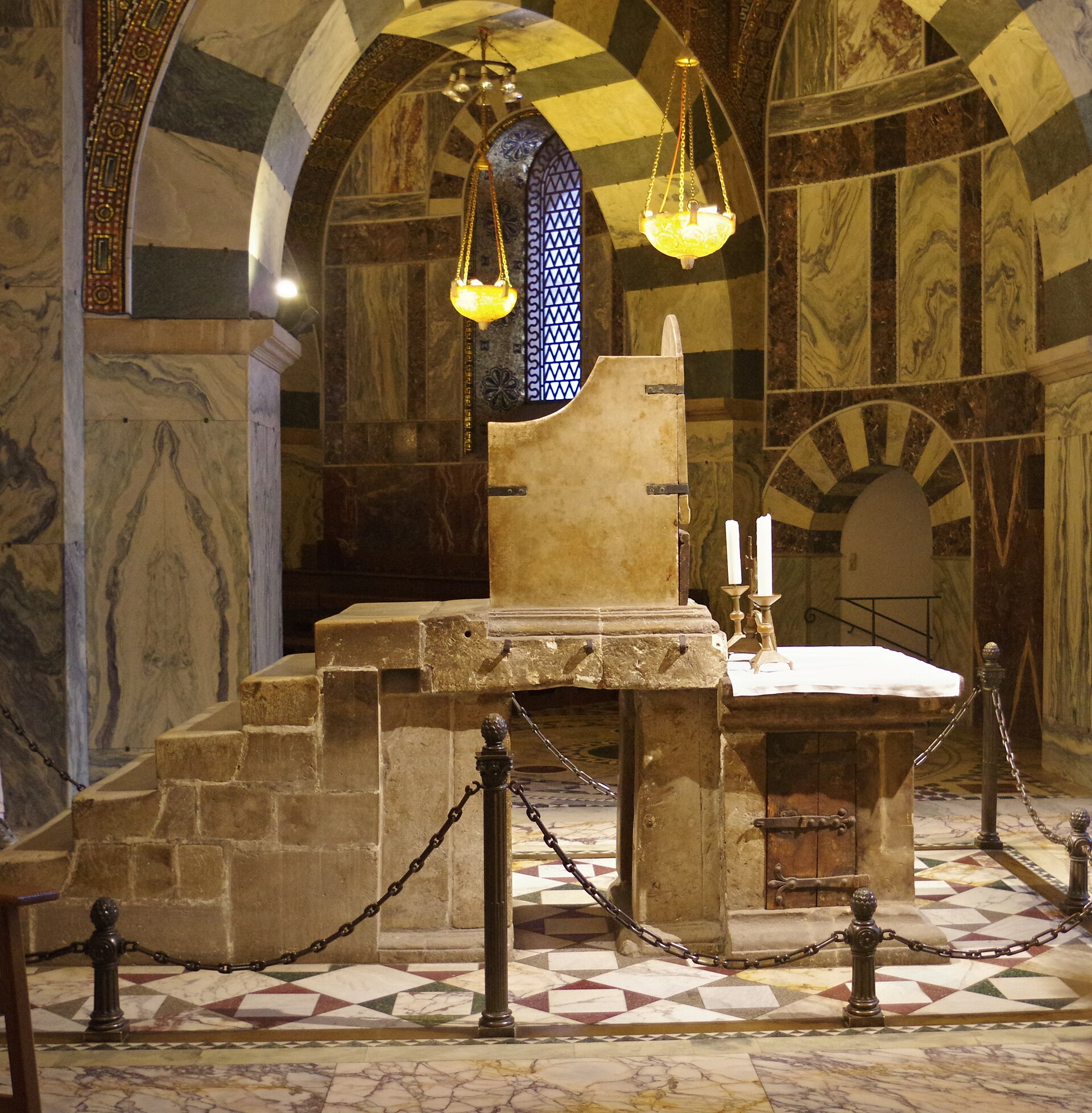
On 1 October 1273 the prince-electors met at Frankfurt to end an interregnum that had run for decades, and chose a middling count from the Aargau. He was crowned at Aachen three weeks later, in Charlemagne's own church.
Rudolf I was not among the most powerful princes in the Empire, and there is every sign that his election surprised him as much as anybody. It is generally thought the electors chose him because he was not frightening — a compromise who would leave them alone.
He turned out to be rather good at it. He spent much of his reign trying to legislate private warfare out of existence, which was the great unsolved problem of the age and which nobody managed to solve for another two hundred years. And in August 1278, on the Marchfeld, his army defeated Ottokar II of Bohemia, who was killed in the fighting. Four years later Austria was formally invested in his family at Augsburg.
That is the hinge. A Swiss family became an Austrian one, and stayed Austrian for six hundred years. Nobody standing on the Marchfeld that August could have known it.
What the family actually built
It is easy to write this history as a list of wars, because wars come with dates. The more interesting list is the other one.
Universities. Vienna in 1365, founded by the same Rudolf IV whose other great enterprise was a set of forged charters. Freiburg im Breisgau in 1457. Leuven, founded in 1425, passed under Burgundian and then Habsburg sovereignty — Erasmus taught there and founded a college for the study of three languages at once; Vesalius studied there before going to Padua and rewriting anatomy from the body outwards rather than from the books.
A ban on private war. The Ewiger Landfriede of 7 August 1495 outlawed the medieval right of feud in the Empire for good. Legal historians read it as the beginning of a state's monopoly on legitimate force — one of the genuinely large ideas in European history, and it came out of a diet at Worms. Its funding failed, feuds carried on well into the next century, and the whole reform programme is described by historians with the word Stückwerk: a patchwork. It was still the right patchwork.
Collections that were actually ordered. At Schloss Ambras, Archduke Ferdinand II built what is often called the first purpose-designed museum in Europe, and arranged it by material rather than by value — the coral with the coral, the ivory with the ivory. At Prague, Rudolf II filled a castle with clocks, automata, minerals, paintings and astronomers, and paid for the observations from which Kepler afterwards derived his laws.
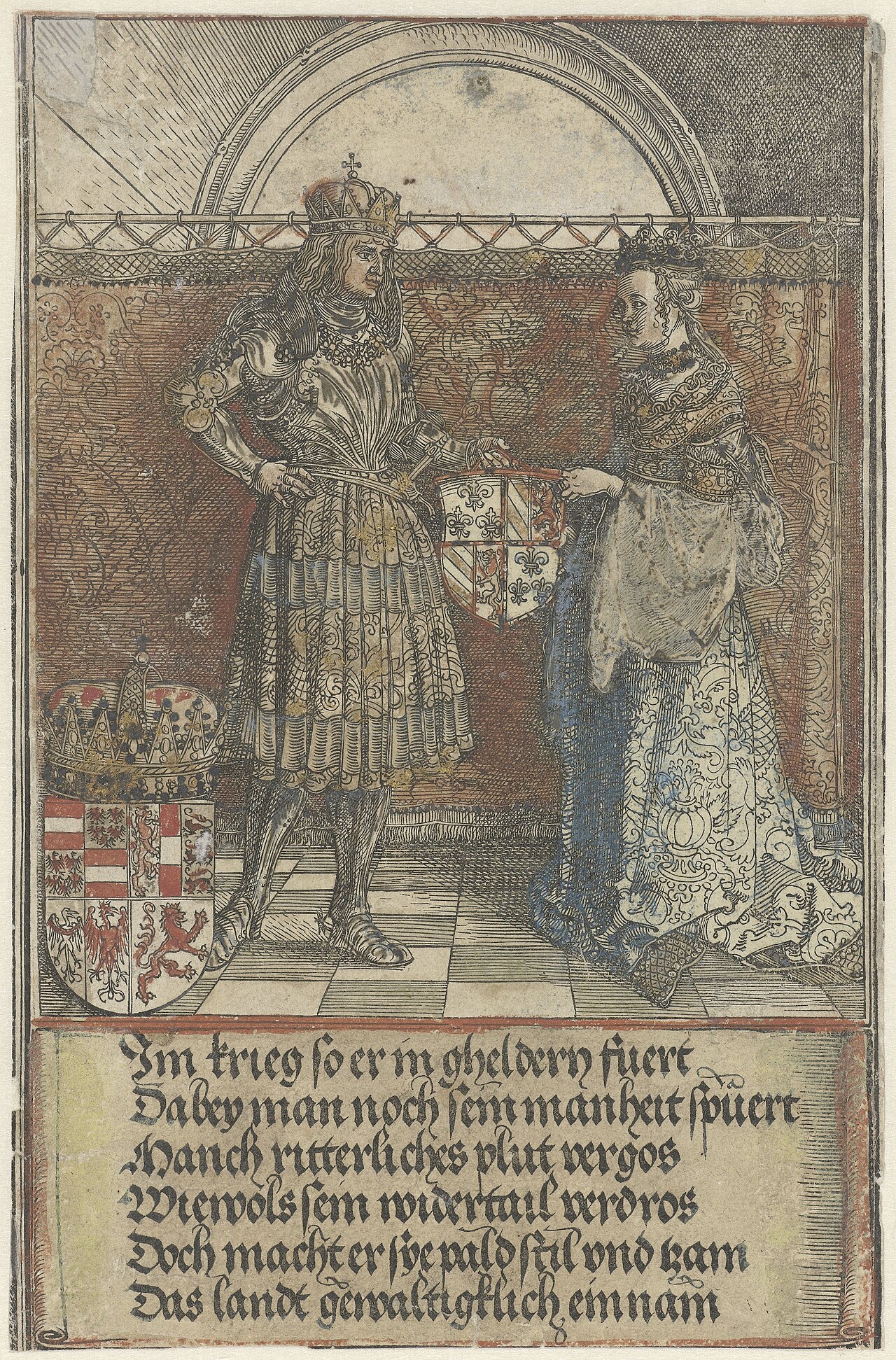
And the post. In 1490 Maximilian I commissioned a relay messenger service so that he could govern the Low Countries from Innsbruck.
What happened next is why that last one matters, and the Cabinet tells it.
Charles V, and the division of 1556
Charles V was born at Ghent in 1500 and inherited, by a sequence of deaths and marriages that nobody had planned, more of Europe than any ruler since Charlemagne — and, through Spain, a great deal of the world beyond it.
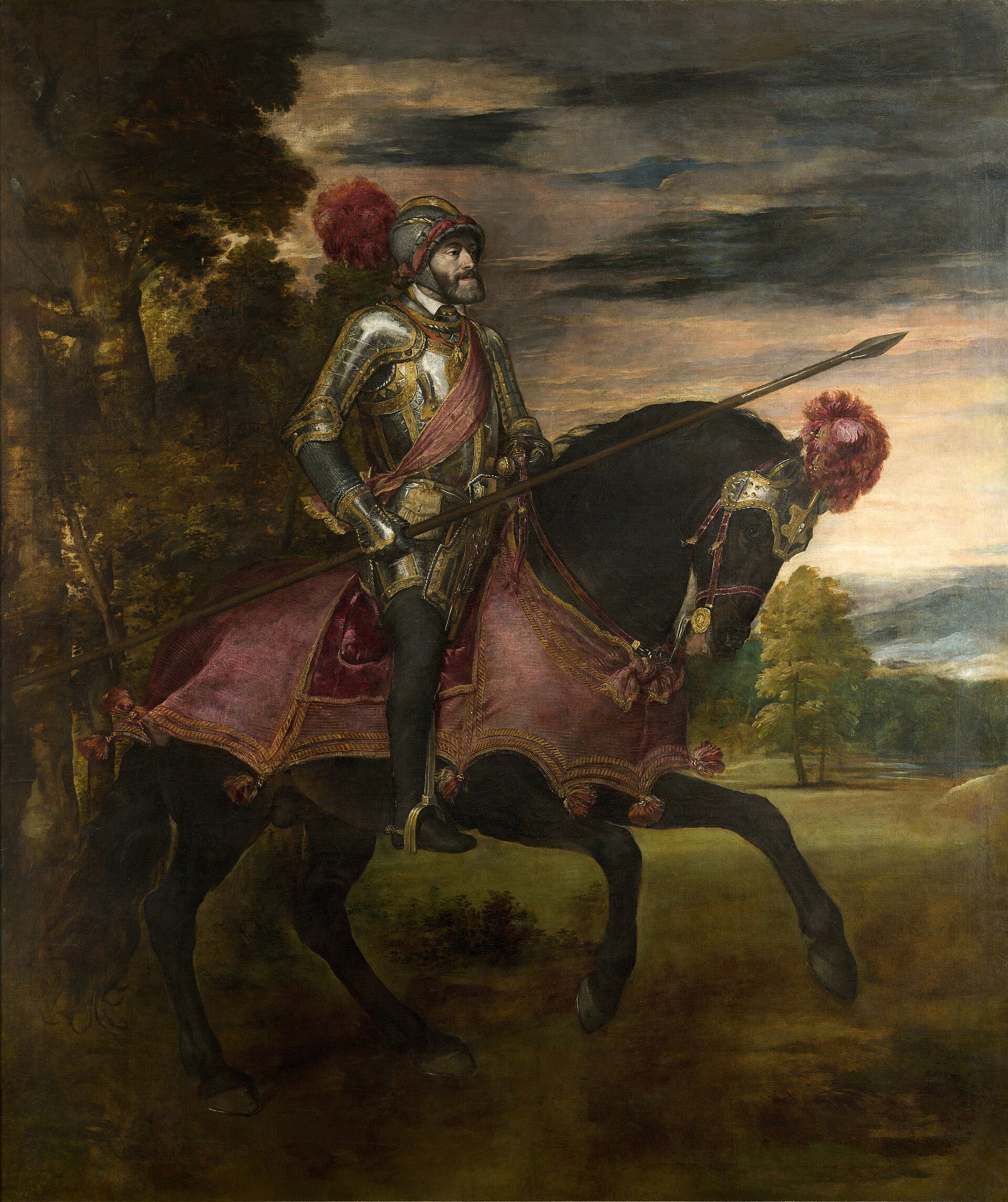
He spent forty years travelling it. He was crowned, besieged, defeated and victorious across a map that took months to cross. He was painted by Titian on horseback at Mühlberg in 1548, alone against an empty landscape, in armour that still exists — the most famous image the family owns, and one that says nothing whatever about the men who fell there.
He also convened, at Valladolid in 1550 and 1551, a formal debate on whether the conquest of the Indies could be justified at all, with Bartolomé de las Casas arguing one side and Juan Ginés de Sepúlveda the other. No verdict was ever published. That a European monarch called the debate is remarkable; that it changed so little is the harder fact, and both belong here.
The silver that paid for much of this came out of Potosí, mined under the mita, a system of forced rotational labour, at a human cost that is documented and is not in dispute. It belongs in any honest account of where the money came from, and it is on the map with the rest.
In 1555 and 1556 he gave it all away. The Empire and the Austrian lands went to his brother Ferdinand I; Spain, the Netherlands, Naples and the Indies to his son Philip II. From 1556 there are two Habsburg lines, and this page follows the Spanish one, because that is where this family comes from.
Charles retired to the monastery at Yuste in Extremadura and died there on 21 September 1558. He had Titian's La Gloria hung where he could see it from his bed.
John of Austria
In his last weeks at Yuste, a boy was brought to see him. Nobody explained the visit to the boy.
He had been born at Regensburg on 24 February 1547 and christened Jerome, and had been moved between households through his early childhood without being told who he was or staying anywhere long enough to be asked. From 1554 he was raised at Villagarcía de Campos by Luis de Quijada and Doña Magdalena de Ulloa, who gave him the only settled home he had.
In September 1559 he was out hunting in the woods near Valladolid when he was told to dismount. Quijada knelt and asked to kiss his hand. A stranger asked whether he knew who his father was — and then presented him to the hunting party as the Emperor's son. He rode into the city at the King's side.
He was twelve.
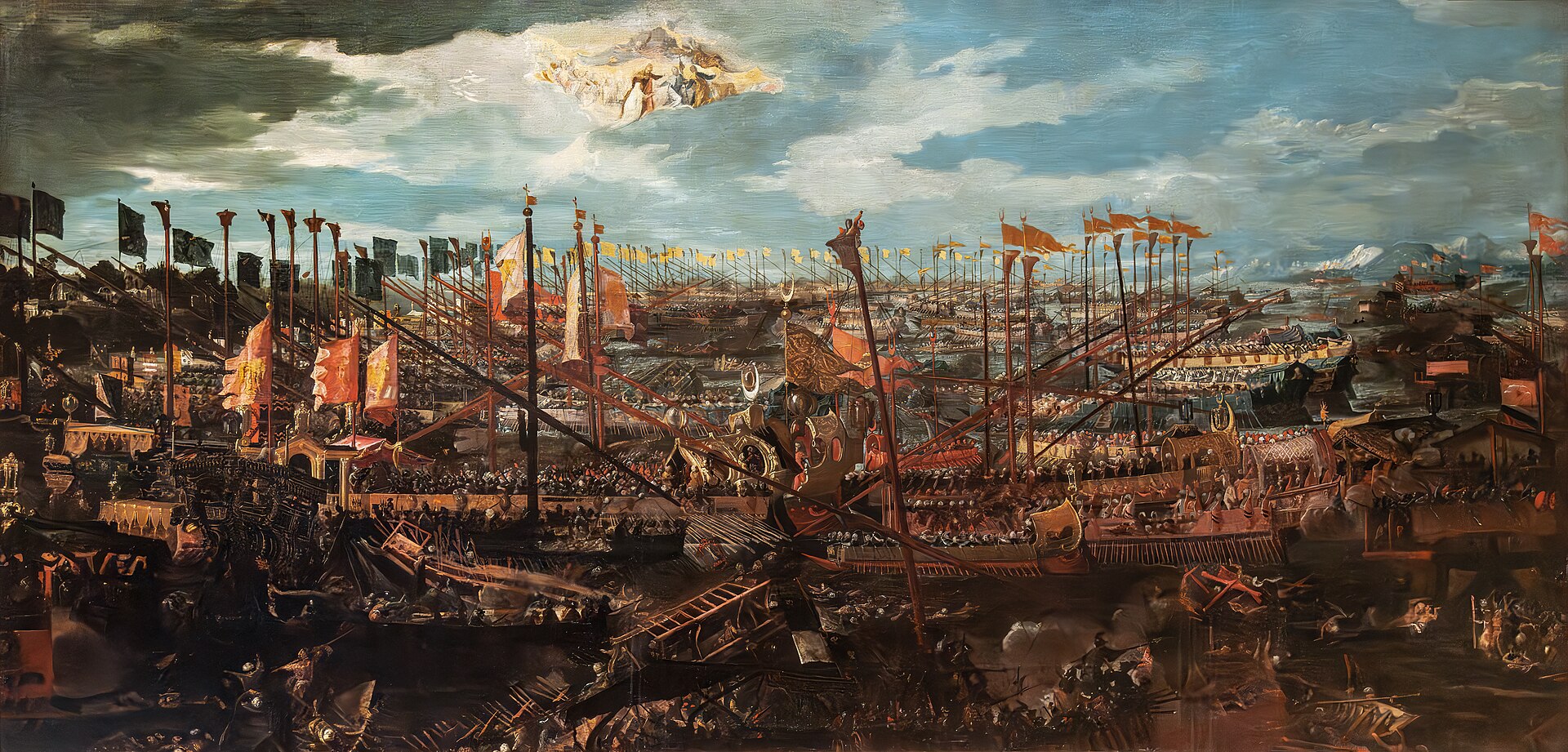
What followed was seventeen years of almost continuous command. The Morisco war in the mountains south of Granada in 1569 and 1570 — a hard, close war fought village by village, and one that included things done under his command that this family does not present as anything other than what they were. Then, in October 1571, at the age of twenty-four, command of the fleet of the Holy League at Lepanto: the last great battle fought mainly under oars, four hours long, tens of thousands dead on both sides, and the galley slaves of both fleets dying chained to their benches.
He took Tunis in 1573, was ordered to raze it, built a citadel instead, and waited to see whether the Pope would crown him king of it. Gregory XIII was willing. Philip II was not. Ten months later La Goleta fell to the Ottomans and everything won in four days was gone in one summer.
He was sent to the Netherlands as Governor-General in 1576, into a war nobody could win. He seized the citadel at Namur in July 1577 and wrote to the Estates that his life was safe nowhere but in a fortress. He broke the army of the Estates at Gembloux in January 1578 and it changed very little. In March his secretary Juan de Escovedo was murdered in a Madrid street in a plot laid by the King's own secretary, and he was left isolated for the seven months he had left.
He died on 1 October 1578, in a camp on the heights above the meeting of the Meuse and the Sambre, aged thirty-one. The ground had been chosen as much for the air as for the position.
His papers were seized and read, and the reading cleared him: what reached the court in the spring of 1579 showed a man who had been entirely faithful to his king. Sixty-three of his autograph letters survive, scattered now across six institutions from Simancas to New York.
From Johannes to today
The Royal House of Habsburg descends in the male line from Johannes, born in 1576, the son of John of Austria and Hillegond. From the end of the sixteenth century the family made its home in what are now the Netherlands, Belgium and Germany, and it lives there still, as well as in France, the United Kingdom, Thailand, the United States and Australia.
Johannes, Harmen, Jan Hermense, Claes Jansse, Jan, Nicolaas, Matthijs, Walig: father to son, the generations follow one another through the Dutch Republic and the kingdom that came after it, most of them in the river country around Vianen and Leerdam.
They married, worked and buried their dead in a handful of towns and villages within a morning’s walk of one another, and those places are marked on the map.
The family holds no lands in its own name and has held none since the end of the sixteenth century. It makes no claim to any land, domain or throne. That is not a concession; it is a straightforward respect for the countries that exist now, and for the people who live in them.
The Spanish crown itself passed out of Habsburg hands in 1700, on the death of Charles II, and the war that followed rearranged Europe. This family had by then been living in the north for a century.
The Low Countries
The other half of the sixteenth century belongs to the Netherlands, and it is not a comfortable story for anyone in it.
It began, as far as any of it can be said to begin, with the Beeldenstorm of August 1566 and the letters Philip II wrote from the woods at Segovia refusing any moderation of the heresy laws. It ran through the executions on the Grand-Place in Brussels in 1568, the taking of Brielle by the Sea Beggars in 1572, the flooding of the fields to relieve Leiden in 1574, the sack of Antwerp by unpaid Spanish troops in 1576, and the two documents of January 1579 — the Union of Arras in the south and the Union of Utrecht in the north — whose line is roughly where the Belgian–Dutch border still runs.
It ended, eighty years after it started, at Münster on 30 January 1648, when the Dutch Republic was recognised as independent. That is the moment the Low Countries stop being a Habsburg question.
The dead of those eighty years were Dutch and Spanish and Flemish and German and English and Scots. This page grieves all of them and blames none of them.
Two threads, one ancient name
Maria Theresa was the last of the ruling Austrian Habsburgs. She married Francis Stephen of Lorraine in 1736, and from 1740 and 1745 the Austrian line continued under a new name: Habsburg-Lorraine, the second part conditional and deliberate, so that the new house would be clearly distinguished.
She is a considerable figure by any measure — she founded what is generally reckoned the first technical university in the world, at Banská Štiavnica, and she is the last person on this page whose reign this site follows closely.
And she legislated about vampires, which is in the Cabinet, and is entirely true.
The Imperial House of Habsburg-Lorraine led Austria and the Empire from then until the end of the First World War, and it is well known and well documented. This site covers it in outline, with respect, and never in competition. Two threads, one ancient name.
After 1740
From here the account is shorter.
This site follows the original Habsburg family, and after Maria Theresa that family was living in the Low Countries, away from the courts and the thrones. The great events of the next two centuries — the Napoleonic wars, Belgian independence in 1830, the unifications, the First World War and the end of four empires with it — happened around them and to them, as they happened to everyone.
Those events are explained here where they touch the family, and never claimed as its own.
And now
The family has no lands, no claims and no quarrel with anyone.
What it has is a very long memory, an unusual amount of documentation, and — in the last few years — the wish to set the record out properly.
That is what this site is.