Credits & copyright
With our thanks
This site stands on other people’s work. Some of it we are obliged to credit; a good deal of it we are not, and we would rather credit it anyway.
No credit was asked for or required. We are giving it because it was generous work, freely shared.
Photography
niko photos
The tree that carries our family tree. Photographed in Nicaragua and given away under the Unsplash License, which asks nothing in return.
His own note when he uploaded it read: “I love the idea of sharing free images for those who cannot afford to pay for them.” He asked only that people who use it follow him. We think that is worth honouring.
unsplash.com/@niko_photos · Instagram @niko.photos
Typography
Playfair Display, Montserrat & Monsieur La Doulaise
The three typefaces this site is set in. Playfair Display by Claus Eggers Sørensen; Montserrat by Julieta Ulanovsky and contributors; Monsieur La Doulaise, the roundhand of the wordmark, by Sudtipos. All released under the SIL Open Font License and free to use.
Cartography
Natural Earth
The coastlines and borders on our Map page. Natural Earth is a public-domain map dataset, the work chiefly of Tom Patterson and Nathaniel Vaughn Kelso with the support of NACIS and others, and its terms could not be plainer: “No permission is needed to use Natural Earth. Crediting the authors is unnecessary.”
We are crediting them anyway, because a dataset that asks for nothing still took years of somebody’s life to make. We took it in the TopoJSON form prepared by Mike Bostock, projected it once, and built it into the page: the map is served from our own pages, no tile server is contacted, and nothing about your visit leaves this site.
Pictures
Captions on this site say what a picture shows. Who made it, where it is kept, and on what terms we show it, is set out on this page.
Paintings, engravings and manuscripts
All of the following are out of copyright by age. They reach us through Wikimedia Commons, which is a finding aid rather than a source of record: the work, its painter and the collection that holds it are what is credited here.
- Titian, Charles V at Mühlberg, 1548 — Museo del Prado, Madrid
- Titian, Charles V seated — and Isabella of Portugal, 1548, Museo del Prado, Madrid
- Titian, Philip II of Spain — Museo del Prado, Madrid
- Albrecht Dürer, Portrait of the Emperor Maximilian I, 1519 — Kunsthistorisches Museum, Vienna
- Juan de Flandes, Joanna of Castile, c. 1500
- Alonso Sánchez Coello, Don Juan de Austria in armour, 1567; and Don Juan de Austria as a boy, c. 1559 — the latter Art Institute of Chicago
- Frans Francken the Younger, Allegory on the abdication of the Emperor Charles V at Brussels, 25 October 1555 — Rijksmuseum, Amsterdam
- Andrea Vicentino, The Battle of Lepanto — Museo Correr, Venice; photograph by Didier Descouens
- Paolo Veronese, Allegory of the Battle of Lepanto — Gallerie dell’Accademia, Venice
- Johannes Vermeer, View of Delft, c. 1660 — Mauritshuis, The Hague; and The Little Street — Rijksmuseum, Amsterdam
- Michel-Ange Houasse, View of the Monastery of El Escorial — Museo del Prado, Madrid
- Martin van Meytens, The Empress Maria Theresa; and The Emperor Francis I Stephen of Lorraine — the latter Österreichische Galerie Belvedere, Vienna
- Juan Carreño de Miranda, Charles II of Spain
- Antoni Boys, Rudolf I — Kunsthistorisches Museum, Vienna
- The Burgundian marriage, from the Triumphal Arch of the Emperor Maximilian I — Rijksmuseum, Amsterdam (CC0)
- Acta Murensia, twelfth century — Staatsarchiv des Kantons Aargau, AA/4947, fol. 13v
- A jewelled collar of the kind worn with the Order of the Golden Fleece — Walters Art Museum, Baltimore
- The Netherlands, 1559–1609, from William R. Shepherd, Historical Atlas, 1911
- Barbara Blomberg, as imagined by an illustrator for Die Gartenlaube, 1894
Photographs, used with permission or under their licences
- Michel Jaussi Photography — Habsburg Castle, Aargau, on the front page. © Michel Jaussi Photography, used with the photographer’s permission
- Roland Zumbuehl — Habsburg Castle, Aargau. CC BY-SA 3.0
- Zairon — the abbey church at Muri, Aargau. CC BY-SA 3.0
- Berthold Werner — Aachen Cathedral. CC BY-SA 3.0
- Gerd Eichmann — the Hofburg, Vienna. CC BY-SA 4.0
- FrDr — the Court of Savoy, Mechelen. CC BY-SA 4.0
- Jl FilpoC — the house at Cuacos de Yuste, and the tomb of John of Austria at El Escorial. CC BY-SA 4.0
- Zarateman — the palace of Charles V at Yuste. CC0
Where a picture is reproduced under a CC BY-SA licence, the licence asks that the photographer be named and that anything derived from the picture be shared on the same terms. We name them, we have altered nothing, and we are glad of the work.
Every picture, page by page
Every picture on the written pages (105)
Ancestry
- Habsburg Castle, above the Aare in the canton of Aargau — Photograph by Roland Zumbuehl, via Wikimedia Commons (CC BY-SA 3.0)
- The Acta Murensia, written at Muri Abbey about 1140 — Staatsarchiv des Kantons Aargau, AA/4947, fol. 13v, via Wikimedia Commons (public domain)
- The ridge above Brugg, engraved in the eighteenth century for travellers who came to look at it — Anonymous engraving, Zentralbibliothek Zürich, via Wikimedia Commons (public domain)
- The Herengracht at Amsterdam, about 1671, in the Dutch Republic where the later generations of the line lived — Gerrit Adriaensz. Berckheyde, Rijksmuseum, Amsterdam, via Wikimedia Commons (public domain)
Heads of the House
- Habsburg Castle in Aargau, raised by Radbot, the first head of the house — Photograph by Roland Zumbuehl, via Wikimedia Commons (CC BY-SA 3.0)
- A gravestone at Königsfelden, the abbey founded where Albrecht I was killed — Drawing by Johann Rudolf Rahn, Zentralbibliothek Zürich, via Wikimedia Commons (public domain)
Charles V
- The abdication at Brussels, 25 October 1555, as imagined seventy years later — Frans Francken the Younger, Rijksmuseum, Amsterdam, via Wikimedia Commons (public domain)
- Charles V at Mühlberg, painted by Titian in 1548 — Titian, Museo del Prado, Madrid, via Wikimedia Commons (public domain)
- The Graslei at Ghent — Photograph by Marc Ryckaert, via Wikimedia Commons (CC BY 3.0)
- The Court of Savoy at Mechelen, where his aunt Margaret brought him up — Photograph by FrDr, via Wikimedia Commons (CC BY-SA 4.0)
- Europe about 1560 — William R. Shepherd, Historical Atlas, via Wikimedia Commons (public domain)
- The Emperor seated, by Titian — Titian, via Wikimedia Commons (public domain)
- A Dutch church stripped white — Pieter Jansz. Saenredam, The National Gallery, London, via Wikimedia Commons (public domain)
- The house he had built beside the monastery at Yuste, where he died in September 1558 — Photograph by Zarateman, via Wikimedia Commons (CC0)
John of Austria
- The Battle of Lepanto, 7 October 1571 — Andrea Vicentino, Museo Correr, Venice; photograph Didier Descouens, via Wikimedia Commons (public domain)
- John of Austria in armour, painted in 1567 when he was twenty — Alonso Sánchez Coello, via Wikimedia Commons (public domain)
- Regensburg on the Danube, where he was born in February 1547 — Photograph by High Contrast, via Wikimedia Commons (CC BY 3.0 DE)
- The house at Cuacos de Yuste where the boy called Jeromin was brought up, within sight of his father's retirement — Photograph by Jl FilpoC, via Wikimedia Commons (CC BY-SA 4.0)
- The same boy, painted about 1559, the year everything he thought he knew was corrected — Alonso Sánchez Coello, Art Institute of Chicago, via Wikimedia Commons (public domain)
- Barbara Blomberg, his mother, as a nineteenth-century illustrator imagined her — Die Gartenlaube, 1894, via Wikimedia Commons (public domain)
- A full-size replica of the Real, the galley he commanded at Lepanto, at the Maritime Museum in Barcelona — Photograph by Jerzy Kociatkiewicz, via Wikimedia Commons (CC BY-SA 2.0)
- The same battle, painted for Venice by Veronese — Paolo Veronese, Gallerie dell'Accademia, Venice, via Wikimedia Commons (public domain)
- Philip II, his half-brother, who governed the Netherlands from nine hundred miles away and never once let him forget who was king — Titian, Museo del Prado, Madrid, via Wikimedia Commons (public domain)
- The citadel at Namur above the Meuse — Photograph, KU Leuven libraries collection, via Wikimedia Commons (public domain)
- El Escorial, where his brother was building a monastery and a mausoleum at the same time — Michel-Ange Houasse, Museo del Prado, Madrid, via Wikimedia Commons (public domain)
- His tomb at El Escorial, where he lies among kings — Photograph by Jl FilpoC, via Wikimedia Commons (CC BY-SA 4.0)
The Quiet Centuries
- Delft, about 1660 — Johannes Vermeer, Mauritshuis, The Hague, via Wikimedia Commons (public domain)
- A street in Delft, painted by Vermeer — Johannes Vermeer, Rijksmuseum, Amsterdam, via Wikimedia Commons (public domain)
- The Netherlands between 1559 and 1609, the years in which the family's world changed shape — William R. Shepherd, Historical Atlas, 1911, via Wikimedia Commons (public domain)
- And all the while, eight hundred kilometres away, the castle the name came from — Photograph by Roland Zumbuehl, via Wikimedia Commons (CC BY-SA 3.0)
- A church stripped white — Pieter Jansz. Saenredam, The National Gallery, London, via Wikimedia Commons (public domain)
- Dutch shipping in a calm — Willem van de Velde the Younger, Rijksmuseum, Amsterdam, via Wikimedia Commons (public domain)
- The bend in the Herengracht, Amsterdam, about 1671 — Gerrit Adriaensz. Berckheyde, Rijksmuseum, Amsterdam, via Wikimedia Commons (public domain)
Women of the House
- The Court of Savoy at Mechelen, Margaret of Austria's palace and the school for half the family — Photograph by FrDr, via Wikimedia Commons (CC BY-SA 4.0)
- Mary of Burgundy, who brought the Low Countries into the house and died at twenty-five, thrown from a horse — Attributed to Niklas Reiser, Kunsthistorisches Museum, Vienna, via Wikimedia Commons (public domain)
- Margaret of Austria, Duchess of Savoy, twice regent of the Netherlands — After Bernard van Orley, via Wikimedia Commons (public domain)
- Mary of Hungary, who governed the Netherlands for twenty-four years and asked repeatedly to be released from it — Attributed to Hans Maler zu Schwaz, via Wikimedia Commons (public domain)
- Margaret of Parma, Governor of the Netherlands — Antonis Mor, Gemäldegalerie, Berlin, via Wikimedia Commons (public domain)
- Joanna of Castile, Queen of Castile in her own right, and the subject of four hundred years of other people's explanations — Juan de Flandes, via Wikimedia Commons (public domain)
- Isabella of Portugal, painted by Titian years after her death, from an older portrait and a description — Titian, Museo del Prado, Madrid, via Wikimedia Commons (public domain)
- Maria Theresa, through whom the Austrian inheritance passed to a house with a joined name — Martin van Meytens, via Wikimedia Commons (public domain)
The Habsburg jaw
- Charles II of Spain, the last of the Spanish Habsburgs — Juan Carreño de Miranda, via Wikimedia Commons (public domain)
- Maximilian I, painted by Dürer in 1519 — Albrecht Dürer, Kunsthistorisches Museum, Vienna, via Wikimedia Commons (public domain)
- Charles V by Titian — Titian, via Wikimedia Commons (public domain)
- Philip II, who married his niece — Titian, Museo del Prado, Madrid, via Wikimedia Commons (public domain)
- Philip IV, two generations further on — Workshop of Diego Velázquez, via Wikimedia Commons (public domain)
Was Charles V the first European?
- El Escorial, the monastery-palace his son built — Michel-Ange Houasse, Museo del Prado, Madrid, via Wikimedia Commons (public domain)
- The Burgundian marriage — From the Triumphal Arch of Maximilian I, Rijksmuseum, Amsterdam (CC0)
- Europe about 1560 — William R. Shepherd, Historical Atlas, via Wikimedia Commons (public domain)
- The stone throne in the gallery at Aachen, where the kings of the Romans were seated until 1531, in the church where Charlemagne lies — Photograph by Berthold Werner, via Wikimedia Commons (CC BY-SA 3.0)
- Ghent, where he was born, and which he later punished for refusing to pay for his wars — Photograph by Marc Ryckaert, via Wikimedia Commons (CC BY 3.0)
- Brussels, 25 October 1555 — Frans Francken the Younger, Rijksmuseum, Amsterdam, via Wikimedia Commons (public domain)
- The Hofburg in Vienna, from which the eastern half of his inheritance was governed after him — Photograph by Gerd Eichmann, via Wikimedia Commons (CC BY-SA 4.0)
The Habsburg-Lorraine Line
- The Hofburg in Vienna, seat of the Austrian line — Photograph by Gerd Eichmann, via Wikimedia Commons (CC BY-SA 4.0)
- Ferdinand I, younger brother of Charles V, who took the Austrian lands in 1521 — Kunsthistorisches Museum, Vienna, via Wikimedia Commons (public domain)
- Charles II of Spain, with whom the Spanish branch ended on 1 November 1700 — Juan Carreño de Miranda, via Wikimedia Commons (public domain)
- Charles VI, who spent twenty-seven years arranging a succession for a daughter — Johann Gottfried Auerbach, Belvedere, Vienna, via Wikimedia Commons (public domain)
- Maria Theresa, through whom the Austrian inheritance passed — Martin van Meytens, via Wikimedia Commons (public domain)
- Francis Stephen of Lorraine, whose name joined hers — Martin van Meytens, Österreichische Galerie Belvedere, Vienna, via Wikimedia Commons (public domain)
- The château at Lunéville, the Lorraine court Francis Stephen gave up — Photograph by Pymouss, via Wikimedia Commons (CC BY-SA 3.0)
The Present and the Future
- Where it began — Photograph by Roland Zumbuehl, via Wikimedia Commons (CC BY-SA 3.0)
Great Stories
- The fleets meet in the Gulf of Corinth, 7 October 1571 — Sixteenth-century painting, via Wikimedia Commons (public domain)
Thirty Generations
- Thirty generations begin here, on a ridge above the Aare — Photograph by Roland Zumbuehl, via Wikimedia Commons (CC BY-SA 3.0)
Curiosities
- Rudolf II painted entirely out of fruit and vegetables — Giuseppe Arcimboldo, Skokloster Castle; via Wikimedia Commons (public domain)
- A jewelled collar of the kind a Habsburg would have worn with the Golden Fleece — Walters Art Museum, Baltimore, via Wikimedia Commons (public domain)
Before the castle
- Muri Abbey, where the family's memory was written down — Photograph by Zairon, via Wikimedia Commons (CC BY-SA 3.0)
- The old castle, drawn from life in the eighteenth century — Johann Melchior Füssli, Zentralbibliothek Zürich, Graphische Sammlung und Fotoarchiv, via Wikimedia Commons (public domain)
- A page of the Acta Murensia — Staatsarchiv des Kantons Aargau, AA/4947, fol. 13v, via Wikimedia Commons (public domain)
The castle and the county
- Habsburg Castle — Photograph by Roland Zumbuehl, via Wikimedia Commons (CC BY-SA 3.0)
- The abbey church at Muri, founded by Radbot and Ita in the 1020s — Photograph by Zairon, via Wikimedia Commons (CC BY-SA 3.0)
- The old castle drawn from life in the eighteenth century, by which time it had belonged to other people for three hundred years — Johann Melchior Füssli, Zentralbibliothek Zürich, via Wikimedia Commons (public domain)
- The same ridge above Brugg, engraved for travellers who came to look at it — Anonymous engraving, Zentralbibliothek Zürich, via Wikimedia Commons (public domain)
- The Acta Murensia, written at Muri about 1140, which is where almost everything on this page comes from — Staatsarchiv des Kantons Aargau, AA/4947, fol. 13v, via Wikimedia Commons (public domain)
Kings of the Romans
- The Carolingian stone throne in the upper gallery at Aachen, the coronation seat of the kings of the Romans until 1531. Rudolf was crowned in this church on 24 October 1273 — Photograph by Berthold Werner, via Wikimedia Commons (CC BY-SA 3.0)
- Rudolf I, elected in part because he seemed harmless — Antoni Boys, Kunsthistorisches Museum, Vienna, via Wikimedia Commons (public domain)
- Albrecht I, his son, who was murdered by his own nephew within sight of the family's old country — Via Wikimedia Commons (public domain)
- Leopold, killed at Sempach on 9 July 1386 with much of his nobility, against the men of the Confederation — Via Wikimedia Commons (public domain)
- The castle itself passed out of the family's hands in 1415 and has never been in them since — Photograph by Roland Zumbuehl, via Wikimedia Commons (CC BY-SA 3.0)
- A gravestone at Königsfelden, the abbey founded on the spot where he was killed — Drawing by Johann Rudolf Rahn, Zentralbibliothek Zürich, via Wikimedia Commons (public domain)
- Albrecht II, called the Wise, and also the Lame — Via Wikimedia Commons (public domain)
The Burgundian inheritance
- The Burgundian marriage, from the Triumphal Arch of Maximilian I — Rijksmuseum, Amsterdam (CC0)
- Frederick III, who reigned for fifty-three years and outlasted every rival he had — Via Wikimedia Commons (public domain)
- Maximilian I, painted by Dürer in 1519 — Albrecht Dürer, Kunsthistorisches Museum, Vienna, via Wikimedia Commons (public domain)
- Mary of Burgundy, the richest heiress in Europe — Attributed to Niklas Reiser, Kunsthistorisches Museum, Vienna, via Wikimedia Commons (public domain)
- Joanna of Castile, Queen of Castile in her own right — Juan de Flandes, via Wikimedia Commons (public domain)
- Ghent, where the boy who inherited all of it was born in February 1500 — Photograph by Marc Ryckaert, via Wikimedia Commons (CC BY 3.0)
- The Court of Savoy at Mechelen, where he was brought up by his aunt Margaret — Photograph by FrDr, via Wikimedia Commons (CC BY-SA 4.0)
The empire that could not be governed
- Charles V at Mühlberg, 1548 — the image of an emperor at the height of his power — Titian, Museo del Prado, Madrid, via Wikimedia Commons (public domain)
- Jakob Fugger of Augsburg, who lent most of the money — Albrecht Dürer, via Wikimedia Commons (public domain)
- Luther before the Emperor at Worms in 1521, as a German painter imagined it three and a half centuries afterwards — Anton von Werner, nineteenth century, via Wikimedia Commons (public domain)
- Mohács, 1526, from the Ottoman court's own illustrated history — From the Süleymanname, 1558, via Wikimedia Commons (public domain)
- Brussels, 25 October 1555 — Frans Francken the Younger, Rijksmuseum, Amsterdam, via Wikimedia Commons (public domain)
- The house at Yuste, where he died on 21 September 1558 — Photograph by Zarateman, via Wikimedia Commons (CC0)
Spain, the Netherlands and the parting
- Lepanto, 7 October 1571 — Andrea Vicentino, Museo Correr, Venice; photograph Didier Descouens, via Wikimedia Commons (public domain)
- Philip II, who governed the Netherlands from nine hundred miles away — Titian, Museo del Prado, Madrid, via Wikimedia Commons (public domain)
- John of Austria in armour, 1567 — Alonso Sánchez Coello, via Wikimedia Commons (public domain)
- Charles II, the last of the Spanish Habsburgs, who died on 1 November 1700 — Juan Carreño de Miranda, via Wikimedia Commons (public domain)
- A street in Delft — Johannes Vermeer, Rijksmuseum, Amsterdam, via Wikimedia Commons (public domain)
The Madrigal Affair
- The convent of Nuestra Señora de Gracia at Madrigal de las Altas Torres, where the affair began — Photograph by Miguel Hermoso Cuesta, via Wikimedia Commons (CC BY-SA 3.0)
The Cabinet
- The old castle of Habsburg, drawn by Johann Melchior Füssli in the eighteenth century — Johann Melchior Füssli, Zentralbibliothek Zürich, Graphische Sammlung und Fotoarchiv, via Wikimedia Commons (public domain)
History
- Habsburg Castle above Brugg, engraved in the eighteenth century, long after the family had left it — Anonymous engraving, Zentralbibliothek Zürich, Graphische Sammlung und Fotoarchiv, via Wikimedia Commons (public domain)
The Family Tree
- The old castle of Habsburg, drawn by Johann Melchior Füssli — Johann Melchior Füssli, Zentralbibliothek Zürich, via Wikimedia Commons (public domain)
Credits & Copyright
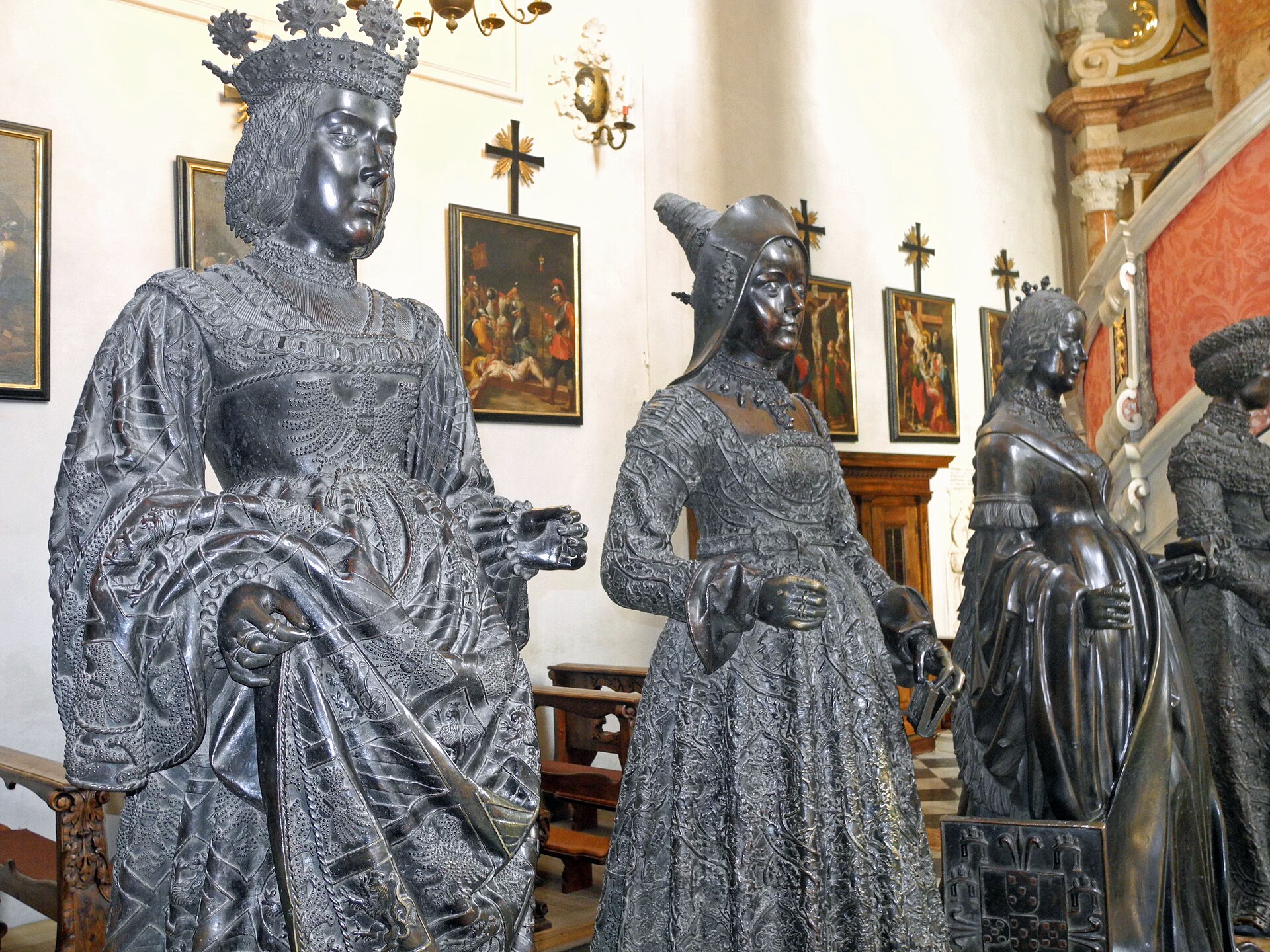
- Twenty-eight bronze figures around an empty tomb at Innsbruck — Photograph by Erich Schmid, via Wikimedia Commons (CC BY-SA 3.0 AT)
Privacy and security
- A street in Delft, painted by Vermeer — Johannes Vermeer, Rijksmuseum, Amsterdam, via Wikimedia Commons (public domain)
Reading Steinacker
- The Acta Murensia — Staatsarchiv des Kantons Aargau, AA/4947, fol. 13v, via Wikimedia Commons (public domain)
Every picture on the map (178)
- Habsburg Castle — Photograph via Wikimedia Commons (CC BY-SA 3.0)
- Muri Abbey — Photograph via Wikimedia Commons
- Brugg — Хрюша, via Wikimedia Commons (CC BY-SA 3.0)
- Muri Abbey (Loreto Chapel) — Paebi, via Wikimedia Commons (CC BY-SA 3.0)
- Morgarten — Badener, via Wikimedia Commons (CC BY 3.0)
- Sempach — DidiWeidmann, via Wikimedia Commons (CC BY-SA 3.0)
- Näfels — Paebi, via Wikimedia Commons (CC BY-SA 4.0)
- Aarau — Lutz Fischer, via Wikimedia Commons (CC BY-SA 4.0)
- Königsfelden — Photograph via Wikimedia Commons
- Aachen — Photograph by Berthold Werner, via Wikimedia Commons (CC BY-SA 3.0)
- Frankfurt — Thomas Wolf, www.foto-tw.de, via Wikimedia Commons (CC BY-SA 3.0 DE)
- Augsburg — Felix König, via Wikimedia Commons (CC BY 3.0)
- Innsbruck (Hofkirche) — Zairon, via Wikimedia Commons (CC BY-SA 4.0)
- Wiener Neustadt — Uschi Seidinger, via Wikimedia Commons (CC BY-SA 3.0)
- Martinswand — Svickova, via Wikimedia Commons (public domain)
- Schloss Ambras — Stephanie P., via Wikimedia Commons (CC BY-SA 3.0 AT)
- Regensburg — Photograph via Wikimedia Commons
- Leganés — Carlos Ramón Bonilla, via Wikimedia Commons (CC BY-SA 3.0)
- Yuste — Photograph via Wikimedia Commons
- Valladolid — Góngora, via Wikimedia Commons (CC BY-SA 3.0)
- Valladolid (Colegio de San Gregorio) — José Luis Filpo Cabana, via Wikimedia Commons (CC BY 3.0)
- Alcalá de Henares — Raimundo Pastor, via Wikimedia Commons (CC BY-SA 4.0)
- Granada / the Alpujarras — joan ggk, via Wikimedia Commons (CC BY 2.0)
- Lepanto — Andrea Vicentino, Palazzo Ducale, Venice, via Wikimedia Commons (public domain)
- Naples — Richard Nevell, via Wikimedia Commons (CC BY-SA 4.0)
- Tunis — Kritzolina, via Wikimedia Commons (CC BY-SA 4.0)
- La Goleta — Jorge Andrade, via Wikimedia Commons (CC BY 2.0)
- Madrid — Sebastian Dubiel, via Wikimedia Commons (CC BY-SA 3.0 DE)
- Namur — Photograph via Wikimedia Commons
- Gembloux — Jean-Pol Grandmont, via Wikimedia Commons (CC BY 2.5)
- El Escorial — Michel-Ange Houasse, via Wikimedia Commons (public domain)
- Madrigal de las Altas Torres — Photograph via Wikimedia Commons
- Las Huelgas Reales — Ecelan, via Wikimedia Commons (CC BY-SA 2.5)
- Palermo — Jean-Pierre Dalbéra, via Wikimedia Commons (CC BY 2.0)
- Pastrana — Via Wikimedia Commons (public domain)
- Colindres — L'irlandés, via Wikimedia Commons (CC BY-SA 3.0)
- Ghent — Photograph via Wikimedia Commons
- Brussels (Grote Markt) — EmDee, via Wikimedia Commons (CC BY-SA 3.0)
- Antwerp — Winny Biets, via Wikimedia Commons (CC BY 4.0)
- Steenvoorde — Lion59, via Wikimedia Commons (CC BY-SA 1.0)
- Heiligerlee — Frans Hogenberg, Rijksmuseum, via Wikimedia Commons (public domain)
- Leiden — Otto van Veen, Rijksmuseum, via Wikimedia Commons (public domain)
- Arras — Zairon, via Wikimedia Commons (CC BY-SA 4.0)
- Utrecht — Sebastiaan ter Burg, via Wikimedia Commons (CC BY 2.0)
- The Hague — Zairon, via Wikimedia Commons (CC BY-SA 4.0)
- Delft — Johannes Vermeer, Mauritshuis, via Wikimedia Commons (public domain)
- Dillenburg — Wilhelm Dilich, 1605, via Wikimedia Commons (public domain)
- Ostend — Peter Snayers, Museum Het Prinsenhof, via Wikimedia Commons (public domain)
- 's-Hertogenbosch — Gerd Eichmann, via Wikimedia Commons (CC BY-SA 4.0)
- Münster — Hans A. Rosbach, via Wikimedia Commons (CC BY-SA 3.0)
- Worms — Norbert Rau, via Wikimedia Commons (CC BY-SA 4.0)
- Villalar — M. Peinado, via Wikimedia Commons (CC BY 3.0 ES)
- Mühlberg — After Luis de Ávila y Zúñiga, via Wikimedia Commons (public domain)
- Metz — Via Wikimedia Commons (CC BY-SA 2.5)
- Gorinchem — Michiel1972, via Wikimedia Commons (CC BY-SA 3.0)
- Tordesillas — stavros1, via Wikimedia Commons (CC BY 3.0)
- Burgos — Gab416, via Wikimedia Commons (CC BY-SA 3.0 ES)
- Prague Castle — Ladislav Pelcl, via Wikimedia Commons (CC BY-SA 4.0)
- Vienna — Photograph via Wikimedia Commons
- Kapuzinergruft — Politikaner, via Wikimedia Commons (CC BY-SA 3.0)
- St Stephen's Cathedral (Herzogsgruft) — Dietmar Rabich, via Wikimedia Commons (CC BY-SA 4.0)
- Banská Štiavnica — Pudelek (Marcin Szala), via Wikimedia Commons (CC BY-SA 4.0)
- Trieste — Tiesse, via Wikimedia Commons (public domain)
- Semmering — Wolfgang Wallner, via Wikimedia Commons (CC BY-SA 3.0)
- Solferino — After L. Sacchi, The Illustrated London News, via Wikimedia Commons (public domain)
- Bouchout Castle — Jean-Pol Grandmont, via Wikimedia Commons (CC BY-SA 2.5)
- Mayerling — Via Wikimedia Commons (public domain)
- Funchal — Luis Miguel Bugallo Sánchez, via Wikimedia Commons (CC BY-SA 4.0)
- Pannonhalma Archabbey — Civertan Grafikai Stúdió, via Wikimedia Commons (CC BY-SA 2.5)
- Seville — Ingo Mehling, via Wikimedia Commons (CC BY-SA 4.0)
- Bruges — Zairon, via Wikimedia Commons (CC BY-SA 4.0)
- Sremski Karlovci — Manedj, via Wikimedia Commons (CC BY-SA 3.0)
- Schloss Orth — Ailura, via Wikimedia Commons (CC BY-SA 3.0 AT)
- Altdorf — Photograph via Wikimedia Commons
- Laufenburg — Jacquesverlaeken, via Wikimedia Commons (CC BY-SA 4.0)
- Lenzburg — TheRunnerUp, via Wikimedia Commons (CC BY-SA 3.0)
- Kyburg — Giovanni-P, via Wikimedia Commons (CC BY-SA 3.0)
- Innsbruck — Photograph via Wikimedia Commons
- Graz — Nick Savchenko, via Wikimedia Commons (CC BY-SA 2.0)
- Wiener Neustadt — Via Wikimedia Commons (CC BY-SA 3.0)
- Mechelen — Photograph via Wikimedia Commons
- Granada — Brett Hodnett, via Wikimedia Commons (CC BY-SA 2.0)
- Toledo — Dmitry Dzhus, via Wikimedia Commons (CC BY 2.0)
- Barcelona — M. McBey, via Wikimedia Commons (CC BY 2.0)
- Messina — Alexander Hoernigk, via Wikimedia Commons (CC BY 3.0)
- Ottmarsheim Abbey Church — Eric Gaba, via Wikimedia Commons (CC BY-SA 2.5)
- Bad Säckingen — Norbert Utz, via Wikimedia Commons (CC BY-SA 4.0)
- Basel Minster — Taxiarchos228, via Wikimedia Commons (Free Art Licence)
- St Blasien Abbey — Sven Scharr, via Wikimedia Commons (CC BY-SA 3.0)
- St Paul's Abbey — Arcomonte26, via Wikimedia Commons (CC BY-SA 3.0 AT)
- Trausnitz Castle — Diego Delso, via Wikimedia Commons (CC BY-SA 4.0)
- Burg Wels — CorinnaW, via Wikimedia Commons (CC BY-SA 3.0 AT)
- Seckau Abbey — Majx, via Wikimedia Commons (CC BY-SA 3.0)
- Basilica of San Petronio — Zairon, via Wikimedia Commons (CC0)
- Speyer — Sail over, via Wikimedia Commons (CC BY-SA 3.0)
- Buda Castle — Varius, via Wikimedia Commons (CC BY-SA 3.0)
- Castello Sforzesco — Mænsard vokser, via Wikimedia Commons (CC BY-SA 4.0)
- Convento de Cristo — Ingo Mehling, via Wikimedia Commons (CC BY-SA 4.0)
- Algiers — Cornelis Anthonisz, Rijksmuseum, via Wikimedia Commons (public domain)
- Parco Visconteo / Mirabello — Rupert Heller, Nationalmuseum Stockholm, via Wikimedia Commons (public domain)
- Haarlem — Frans Hogenberg, via Wikimedia Commons (public domain)
- Maastricht — Bert Kaufmann, via Wikimedia Commons (CC BY 2.0)
- Breda — Diego Velázquez, Museo del Prado, via Wikimedia Commons (public domain)
- Paris — DiscoA340, via Wikimedia Commons (CC BY-SA 4.0)
- Lisbon (Belém) — Vitor Oliveira, via Wikimedia Commons (CC BY-SA 2.0)
- Laxenburg — HeinzLW, via Wikimedia Commons (CC BY-SA 3.0 AT)
- Gödöllő Royal Palace — Rlevente, via Wikimedia Commons (CC BY-SA 3.0)
- Miramare Castle — Daniel Ventura, via Wikimedia Commons (CC BY-SA 4.0)
- Artstetten Castle — Pufacz, via Wikimedia Commons (CC BY-SA 3.0)
- Schloss Eckartsau — Pudelek (Marcin Szala), via Wikimedia Commons (CC BY-SA 3.0)
- Lucerne — Ikiwaner, via Wikimedia Commons (CC BY-SA 3.0)
- Königsfelden — WillYs Fotowerkstatt, via Wikimedia Commons (CC BY 3.0)
- Konstanz (the council buildings) — JoachimKohler-HB, via Wikimedia Commons (CC BY-SA 4.0)
- Nuremberg — DALIBRI, via Wikimedia Commons (CC BY-SA 3.0)
- Bologna — Fabio Ciminelli, via Wikimedia Commons (CC BY-SA 4.0)
- Coudenberg — DimiTalen, via Wikimedia Commons (CC0)
- Linz — Radler59, via Wikimedia Commons (CC BY-SA 4.0)
- Genoa — Julian Lupyan, via Wikimedia Commons (CC0)
- Wasserburg am Inn — Carsten Steger, via Wikimedia Commons (CC BY-SA 4.0)
- Topkapı Palace — Carlos Delgado, via Wikimedia Commons (CC BY-SA 3.0)
- Křivoklát Castle — PatrikPaprika, via Wikimedia Commons (CC BY-SA 3.0)
- Regensburg — Geschichtsfanatiker, via Wikimedia Commons (CC BY-SA 4.0)
- Mainz — salomon10, via Wikimedia Commons (CC BY 2.0)
- Hofburg — C. Stadler/Bwag, via Wikimedia Commons (CC BY-SA 3.0 AT)
- Schönbrunn Palace — Plamen Agov, via Wikimedia Commons (CC BY-SA 3.0)
- St Wenceslas Cathedral — MathKnight and Zachi Evenor, via Wikimedia Commons (CC BY 2.5)
- Augsburg — Guido Radig, via Wikimedia Commons (CC BY 3.0)
- Monastery of Santa María de La Santa Espina — Lancastermerrin88, via Wikimedia Commons (CC BY-SA 4.0)
- Valladolid — Javi Guerra Hernando, via Wikimedia Commons (CC BY-SA 4.0)
- Monasterio de las Descalzas Reales — Luis García, via Wikimedia Commons (CC BY-SA 2.0)
- Monastery of Yuste — pedronchi, via Wikimedia Commons (CC BY 2.0)
- Monastery of Yuste — Zarateman, via Wikimedia Commons (CC0)
- El Escorial — Zvonimir Stamenov, via Wikimedia Commons (CC BY-SA 4.0)
- Piazza San Marco — kallerna, via Wikimedia Commons (CC BY-SA 4.0)
- Palacio Real (site of the old Alcázar) — Carlos Delgado, via Wikimedia Commons (CC BY-SA 3.0)
- Palais de la Cité (the Parlement) — The Limbourg Brothers, via Wikimedia Commons (public domain)
- Muri Abbey — Matthias Wickart, after 1701, via Wikimedia Commons (public domain)
- Strasbourg — Jonathan Martz, via Wikimedia Commons (CC BY-SA 3.0)
- Lenzburg Castle — Wladyslaw Sojka, via Wikimedia Commons (Free Art Licence)
- Kyburg Castle — Via Wikimedia Commons (CC BY-SA 2.5)
- Rheinfelden — Jonas Lucas, via Wikimedia Commons (CC BY-SA 3.0)
- Morgarten — Johann Stumpf, via Wikimedia Commons (public domain)
- Sempach — Adrian Michael, via Wikimedia Commons (CC BY-SA 3.0)
- Rütli meadow — DrHäxer, via Wikimedia Commons (CC BY-SA 4.0)
- Marchfeld — Mór Than, Hungarian National Gallery, via Wikimedia Commons (public domain)
- St Peter's Basilica — Jebulon, via Wikimedia Commons (CC0)
- Hofkirche — Bede735c, via Wikimedia Commons (CC BY-SA 3.0)
- Ghent — Michiel Hendryckx, via Wikimedia Commons (CC BY-SA 4.0)
- Prague Castle — Alois von Saar, Belvedere, via Wikimedia Commons (public domain)
- La Goulette (La Goleta) — Frans Hogenberg, after Jan Cornelisz Vermeyen, via Wikimedia Commons (public domain)
- Mechelen — Peter Meuris, via Wikimedia Commons (CC BY-SA 2.0)
- Leuven — Kris Vandevorst, Agentschap Onroerend Erfgoed, via Wikimedia Commons (CC BY 4.0)
- Citadel of Namur — Jean-Pol Grandmont, via Wikimedia Commons (CC BY-SA 3.0)
- Saint-Aubain Cathedral — Benoit1972, via Wikimedia Commons (CC BY-SA 3.0)
- Westminster — DaniKauf, via Wikimedia Commons (CC BY-SA 3.0)
- Zaragoza — Turol Jones, via Wikimedia Commons (CC BY 2.0)
- Nancy (Étang Saint-Jean) — Eugène Delacroix, Musée des Beaux-Arts de Nancy, via Wikimedia Commons (public domain)
- Chartreuse de Champmol — Morio60, via Wikimedia Commons (CC BY-SA 2.0)
- Château de l'Engelbourg (Thann) — Florival fr, via Wikimedia Commons (CC BY-SA 3.0)
- Besançon (Palais Granvelle) — Jean-Pol Grandmont, via Wikimedia Commons (CC BY-SA 3.0)
- Castel Sant'Angelo — Andreas Tille, via Wikimedia Commons (CC BY-SA 4.0)
- Florence — Giorgio Galeotti, via Wikimedia Commons (CC BY 4.0)
- Palazzo San Giorgio — Twice25 & Rinina25, via Wikimedia Commons (CC BY 2.5)
- Palazzo dei Normanni — Berlinschneid, via Wikimedia Commons (CC BY-SA 4.0)
- Turin (the citadel) — Geobia, via Wikimedia Commons (CC BY-SA 3.0)
- Ludlow Castle — DeFacto, via Wikimedia Commons (CC BY-SA 4.0)
- Peterborough Cathedral — Diliff, via Wikimedia Commons (CC BY-SA 3.0)
- Dunboy Castle — Mike Searle, via Wikimedia Commons (CC BY-SA 2.0)
- Copenhagen Castle (Christiansborg site) — Julian Herzog, via Wikimedia Commons (CC BY 4.0)
- Sønderborg Castle — Via Wikimedia Commons (CC BY-SA 3.0)
- St Canute's Cathedral — Peter Larsen, via Wikimedia Commons (CC BY-SA 3.0)
- Wawel Cathedral — Jan Mehlich, via Wikimedia Commons (CC BY-SA 3.0)
- St Barbara's Cathedral — Pudelek (Marcin Szala), via Wikimedia Commons (CC BY-SA 4.0)
- St Martin's Cathedral — Uoaei1, via Wikimedia Commons (CC BY-SA 4.0)
- Freiburg im Breisgau — Uoaei1, via Wikimedia Commons (CC BY-SA 4.0)
- Ambras Castle — Zairon, via Wikimedia Commons (CC BY-SA 4.0)
- Cologne — Dietmar Rabich, via Wikimedia Commons (CC BY-SA 4.0)
- Craenenburg — Michielverbeek, via Wikimedia Commons (CC BY-SA 3.0)
Copyright and permissions
Every image and every piece of writing on this site has been checked before publication. Most of it belongs to the family. Where something does not, it is used with permission or under a licence that allows it, and it is credited above — whether or not the licence requires us to.
Where we are grateful rather than obliged, we say so anyway. A licence that asks nothing of us is not a reason to say nothing.
What the family owns
The following are the property of the House of Habsburg or of individual family members, and are published here by their permission:
Family collection
Photographs, documents and records held by the family
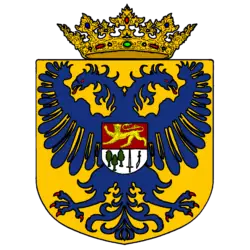
Including the photograph of the painted coat of arms, and the genealogical records underlying the Ancestry and Heads of the House pages.
This website
Text, structure and original artwork
The written history, page copy and original graphic work made for this site are © House of Habsburg. Reproduction elsewhere by arrangement — please ask.
A standing invitation
If you believe something here is yours and is not properly credited — or should not be here at all — we want to know.
And the invitation runs the other way too. If you hold a photograph, a portrait, a document or a piece of family or local history you would be willing to see published here, we would like to hear from you. Contributions are credited on this page unless you would rather they were not.
This page is kept current as the site grows. Last reviewed 8 October 2026.