Thirteen stories
Pick one
Every one of these is told twice: the version everybody knows, and then what the record actually says. Sometimes the record is duller. Sometimes it is a great deal worse. Occasionally the legend turns out to be true, which is the best outcome of all.
 01The hawk that chose the hillWhy the castle stands where it stands, and who says so
 02The document written because the family was finishedEverything known about the first Habsburgs runs through one book
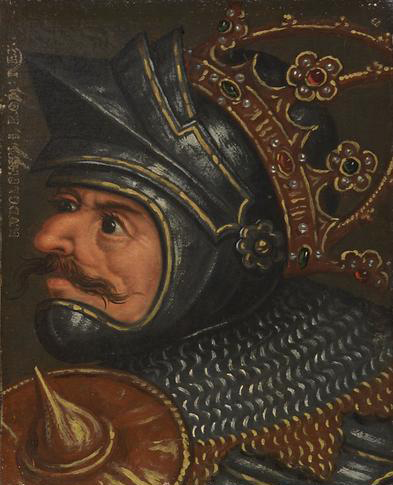 03Rudolf gives away his horseA priest, a swollen stream, and the most useful story this family ever told
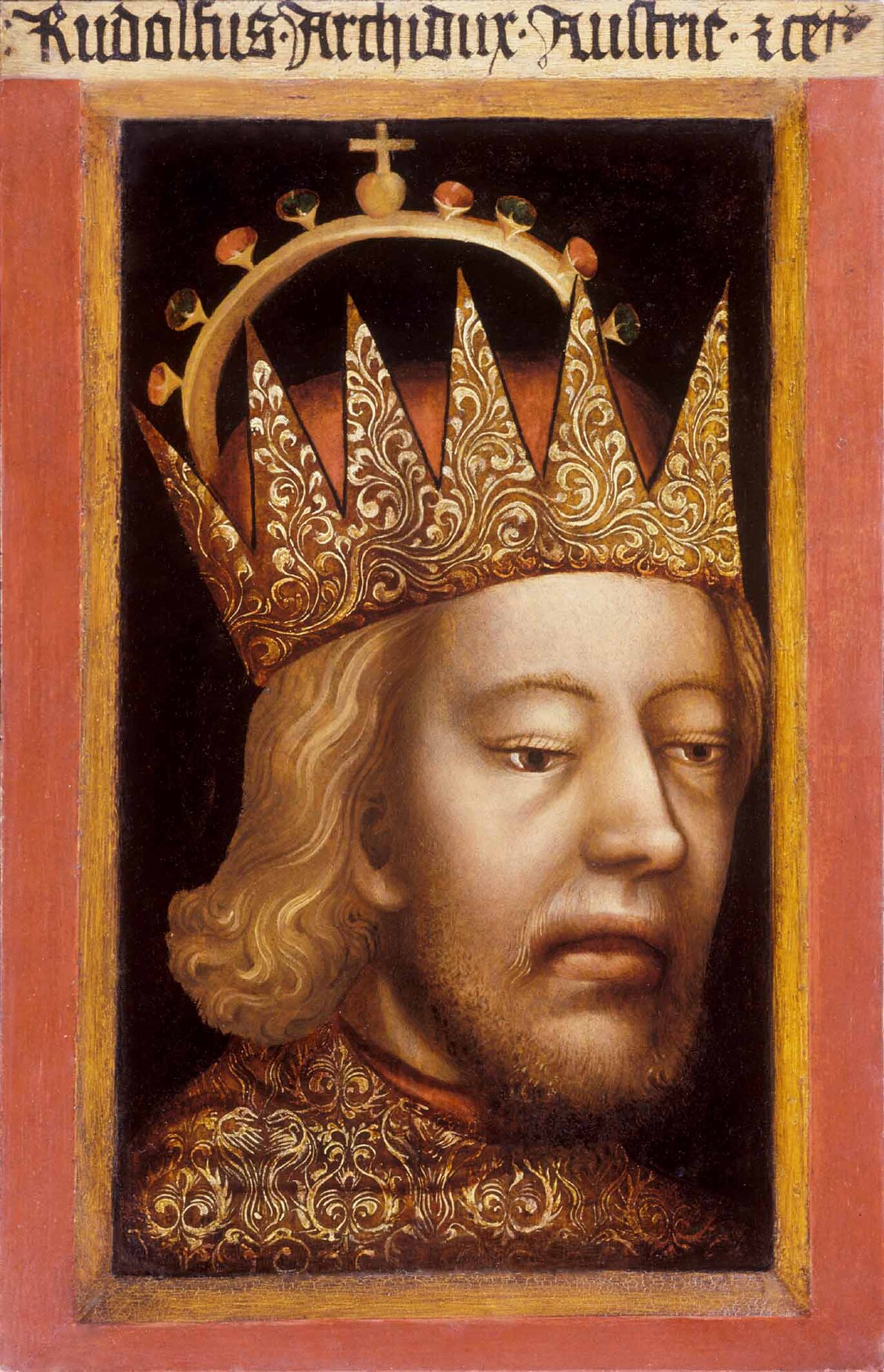 04The duke who forged his own chartersHe was caught. He kept the good bit anyway
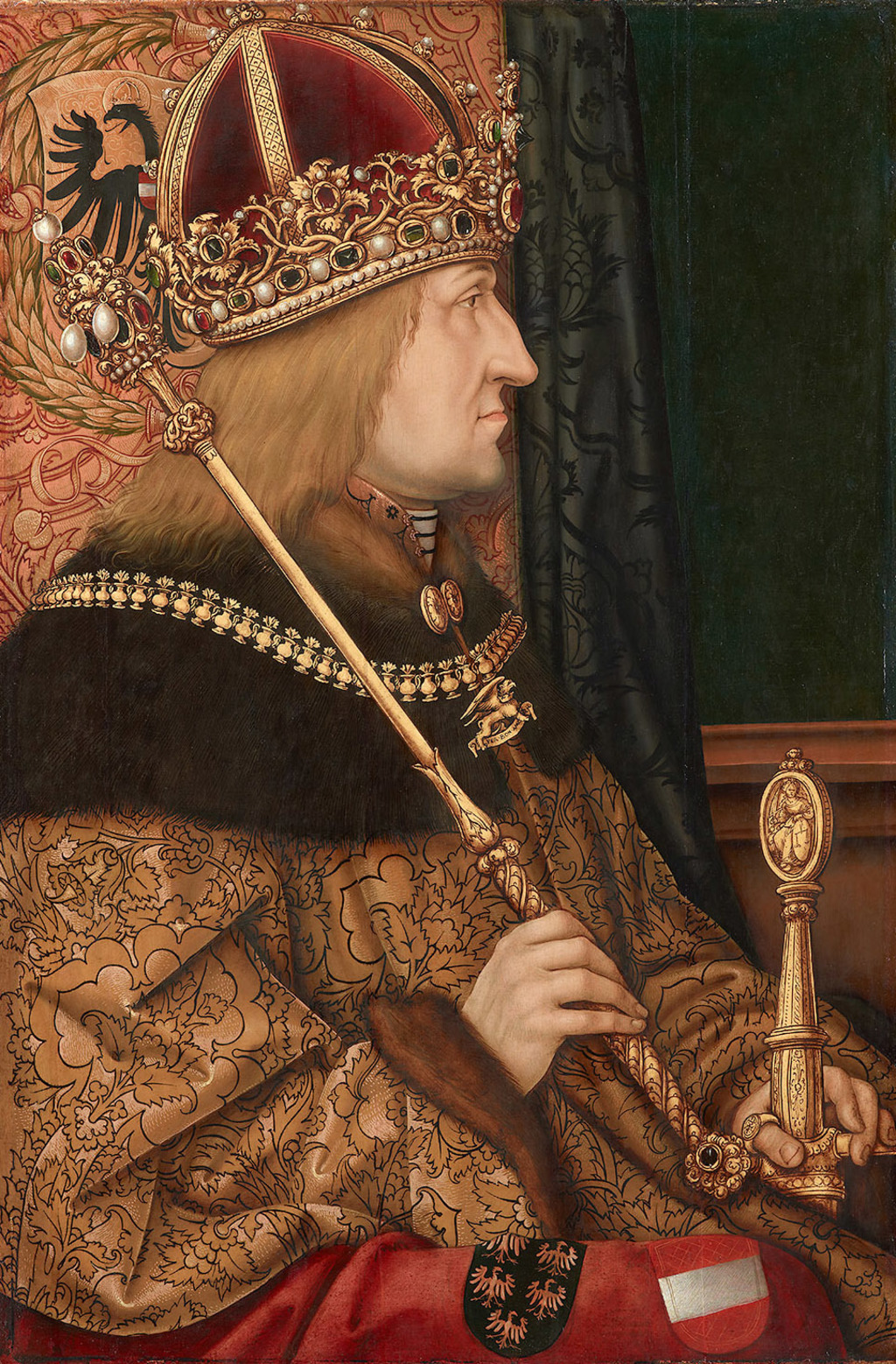 05A E I O UFive letters on everything he owned, and he never once explained them
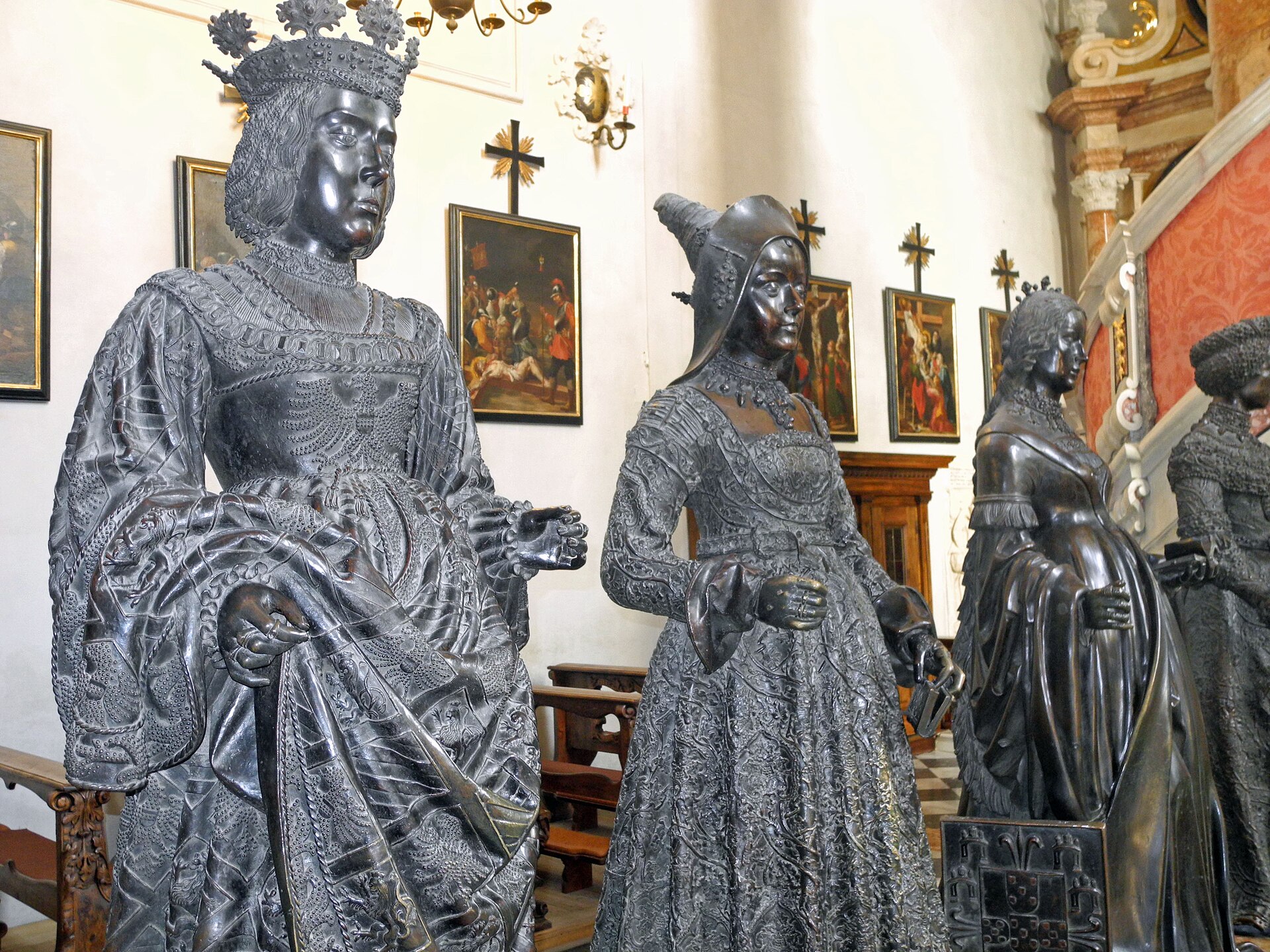 06Twenty-eight bronze giants guarding an empty boxThe grandest tomb in Europe, and nobody is in it
 07The emperor who ordered his own body destroyedWhat Maximilian left instructions to have done to him
 08Let others wage war. You, happy Austria, marryThe neatest summary of a dynasty ever written, and who actually wrote it
 09The glass of cold waterA hard game of pelota, a drink, and a dead king of twenty-eight
 10Juana the MadThe one everybody knows, and the one this family would rather you read properly
 11The emperor who attended his own funeralCharles V, a monastery in Extremadura, and a rehearsal
 12The emperor and the lion who died togetherA menagerie at Prague, an astronomer, and two horoscopes
 13William Tell and the cruel bailiffEverybody knows this one, and in it we are the villains
Tell me the one about…
Great stories, and what actually happened
Nine hundred years of family history produces a great many stories, and time improves most of them. Here are thirteen of the best, told properly and at full length — with the record underneath, one tap away.
We have not pulled our punches on our own. Two of these are the family caught out, one is an outright forgery, and one is a myth this family has quietly enjoyed for five centuries without ever asking whether it was true.
The marks
- AHistorians accept it. It happened.
- BHistorians have disproved it, or shown it to be something rather different.
- CContested. It could go either way and honest people disagree.
- DA lovely story that is almost certainly not true.
The Aargau · about 1020
The hawk that chose the hill
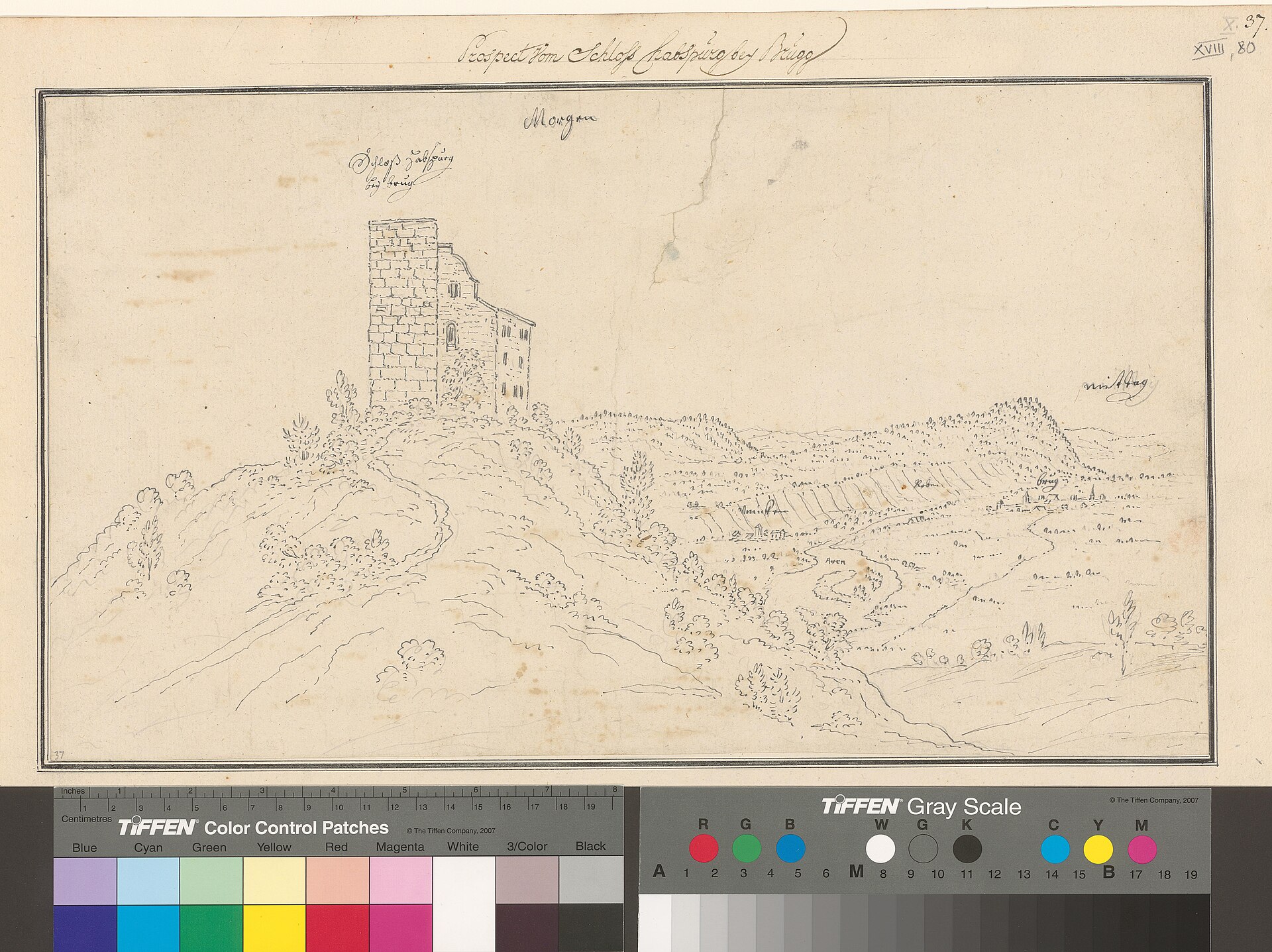
Count Radbot was out hawking above the Aare when his bird slipped the glove and would not come back. It circled, and settled on a crag high over the river, and sat there as though it had made a decision.
He took the point. He built his castle where the hawk had landed, and called it Habichtsburg — the hawk's castle — and from that name, worn down by nine hundred years of use, comes Habsburg.
What actually happened?
The oldest spelling anyone has found is Havichsberch, in a document of 1108. That can be read as the hawk — or it can be read from hab, an old word for a ford.
And there is the joke, which is the real reason the argument matters. A hawk's castle is a piece of noble leisure: a nobleman, a bird, a hill, a whim. A ford castle is a toll booth. It sits above a river crossing and it takes a cut of everything that passes.
Philologists have gone round this for two centuries without settling it, so the family cannot prove it was the romantic one — and, on the evidence of how these counts actually operated for the next three hundred years, the toll booth is the safer bet.
Where this comes from: the 1108 spelling is in the charter that also carries the first person ever called “of Habsburg”. The etymology is unresolved in the specialist literature and the family's own live pages already say historians cannot confirm which reading is right.
Muri Abbey · about 1140
The document written because the family was finished
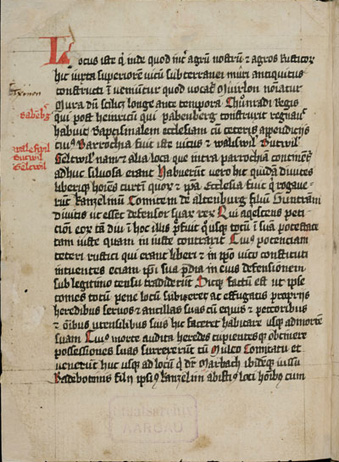
Everything known about the first Habsburgs runs through one book: the Acta Murensia, the foundation chronicle of Muri Abbey, written by an anonymous monk and surviving in a single copy made around 1400.
It is the root of the whole family record. It names the founders, it dates the castle, it supplies the generations that every later genealogy copied.
What actually happened?
It was written partly as an opinion on inheritance, at a moment when the male line looked likely to die out. The abbey had an interest in who its lands would pass to, and it set the family's descent down on parchment while there was still somebody to write it about.
That is a far better sentence than “written a century later”: a real monastery, a real legal purpose, real institutional memory.
The other charter usually cited beside it, the so-called Testament of Wernher, is a forgery of about 1085 dressed up as a charter of 1027.
Where this comes from: the Acta Murensia survives in the Aargau state archive. The inheritance-opinion reading and the dating of the Wernher charter are both settled points in the specialist literature.
Somewhere in Swabia · thirteenth century
Rudolf gives away his horse
Out riding, Rudolf came upon a priest at a swollen stream. The man was carrying the Eucharist to somebody who was dying on the other side, and he could not get across.
Rudolf got down and gave him the horse.
When the priest brought it back afterwards, he would not take it. The animal had carried the Lord, he said, and he was not going to ride it again.
What actually happened?
It is a devotional set-piece of a kind that attaches itself to pious rulers all over medieval Europe, and it was recorded and amplified across centuries until it became a standard item of the family's public character.
Painters loved it. There is a version by Rubens and Jan Wildens in the Prado, another by Franz Pforr in 1810, another by Johann Peter Krafft. A story painted that often has usually been doing a job.
What survives the scepticism is the reputation underneath it: Rudolf's plain manners and his sense of humour are accepted, and they are consistent with how he presented himself. He was elected precisely because he was not frightening.
Where this comes from: the anecdote is a recurring topos in the literature on Habsburg piety; the paintings are catalogued and datable. A kernel is plausible; the polish is certain.
Vienna · 1358 or 1359
The duke who forged his own charters — and got away with the good bit
Rudolf IV had been left out. The Golden Bull of 1356 had settled which princes elected the emperor, and his family was not among them.
So he had some documents made.
Five charters, granting his house extraordinary rights — that its lands could never be divided, that its courts could not be appealed, that its ruler outranked every other duke in the Empire — and inventing, from nothing at all, a brand-new rank to hold them: Archduke.
For good measure the forgers put two of the charters in the names of Julius Caesar and Nero.
What actually happened?
Emperor Charles IV did not simply refuse them. He sent them to Petrarch. The greatest scholar in Europe read the file and declared them forgeries, and the recognition never came.
And then the remarkable part. The invented title stuck anyway. Archduke passed into general use in the family through the fifteenth century, and in 1453 Frederick III — a Habsburg emperor — formally validated the rank his ancestor had made up.
A study published in 2025 revisits the dating and argues the forgery was spotted almost at once, and that Petrarch may not even have been the first to notice.
This is on the site because it is true, and because a family history that only prints the flattering documents is not worth reading.
Where this comes from: the Privilegium Maius is one of the best-documented forgeries of the European Middle Ages. Petrarch's judgement, the refusal of recognition and the 1453 validation are all in the standard accounts; the 2025 redating appeared in the Mitteilungen des Instituts für Österreichische Geschichtsforschung.
Everywhere he built · fifteenth century
A E I O U
Frederick III put five letters on everything. On his buildings, in his books, on his plate, on his grave. A E I O U.
He never explained them. He reigned fifty-three years — longer than any other Holy Roman Emperor — and in all that time he did not once say, in any document anybody has found, what the five vowels were for.
What actually happened?
That is the whole answer, and it has survived every attempt to improve on it.
A note in his notebook, written in a later hand and not by him, glosses it as Alles Erdreich ist Österreich untertan — all the earth is subject to Austria — or the Latin equivalent. It is the reading everyone repeats. It is also somebody else's guess, written down after the fact.
Dozens of other expansions have been proposed over five hundred years. The standard scholarly treatment, published in 1952, examines the notebook and leaves the question open, which is where it remains.
Frederick's reputation is for slowness. The settled judgement of historians is that he overcame his opponents mainly by outliving them. A man who kept a private joke going for half a millennium after his death is not, on reflection, slow.
Where this comes from: Alphons Lhotsky's study of the device and Frederick's notebook, MIÖG 60 (1952), remains the reference.
Innsbruck · from 1502
Twenty-eight bronze giants guarding an empty box
Go into the Hofkirche at Innsbruck and you walk down an aisle lined with over-life-size bronze figures — kings, ancestors, heroes, some real and some invented — standing in two ranks around a great tomb. They are called the Schwarze Mander, the black men, and they are among the finest bronzes of the northern Renaissance.
They are guarding nobody.
What actually happened?
Maximilian I planned forty large bronzes and a hundred statuettes. Eleven were finished when he died in 1519. Twenty-eight survive.
He is not in the tomb because he asked to be buried at Wiener Neustadt, and he is. The church at Innsbruck was built by his grandson Ferdinand I, finished around 1553, because the monument had become far too heavy to move to where the man actually lies.
So the greatest memorial the family ever commissioned stands in the wrong town, around an empty cenotaph, unfinished — and it is still one of the most extraordinary rooms in Europe.
Where this comes from: the emptiness of the cenotaph and the burial at Wiener Neustadt are established fact; the figures for the planned and surviving bronzes are the standard ones.
1519
The emperor who ordered his own body destroyed
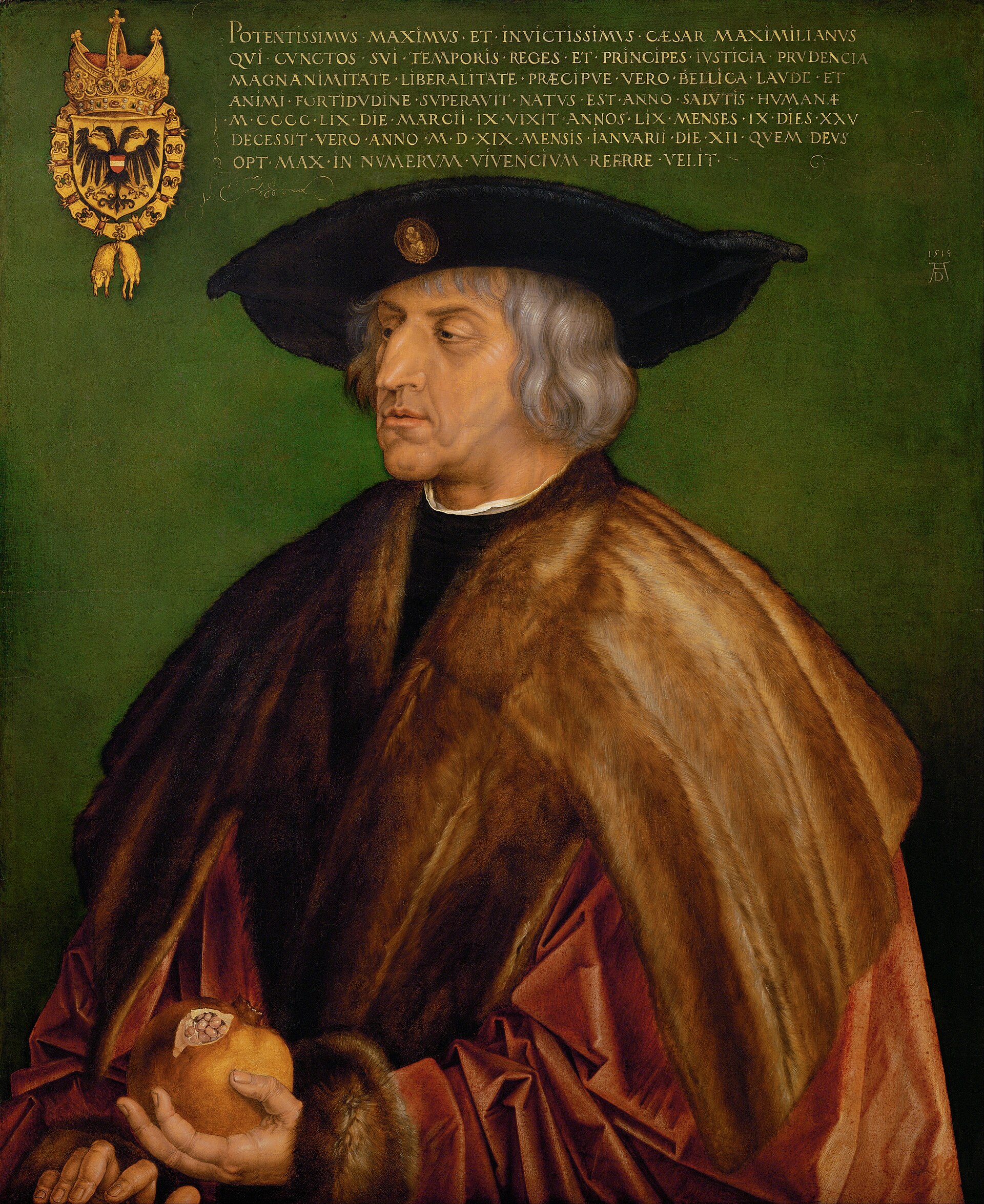
Maximilian left instructions for what was to be done with him after death, and they are not the instructions of a man who wanted a fine tomb.
From the moment of the last rites he was no longer to be addressed by any of his titles. His hair was to be shorn. His teeth were to be knocked out. His body was to be scourged, covered with lime and ash, wrapped in linen, and displayed in public — so that anyone who saw it would understand exactly what earthly glory is worth.
What actually happened?
His confessor, Gregor Reisch, disobeyed him.
He put a rosary in the emperor's hand instead, and that was the end of it.
The instructions are genuine and well documented. The penance never happened. A man who had spent his life curating his own memory — the illustrated autobiographies, the hundred bronzes, the whole vast machinery of being remembered — wrote a final scene of total self-abasement, and the priest at his bedside decided, on the spot and on his own authority, that it was not going to be performed.
Where this comes from: the instructions and the confessor's substitution are both documented, and were set out in the scholarship around the Metropolitan Museum's 2019 exhibition on Maximilian.
The most quoted line about this family
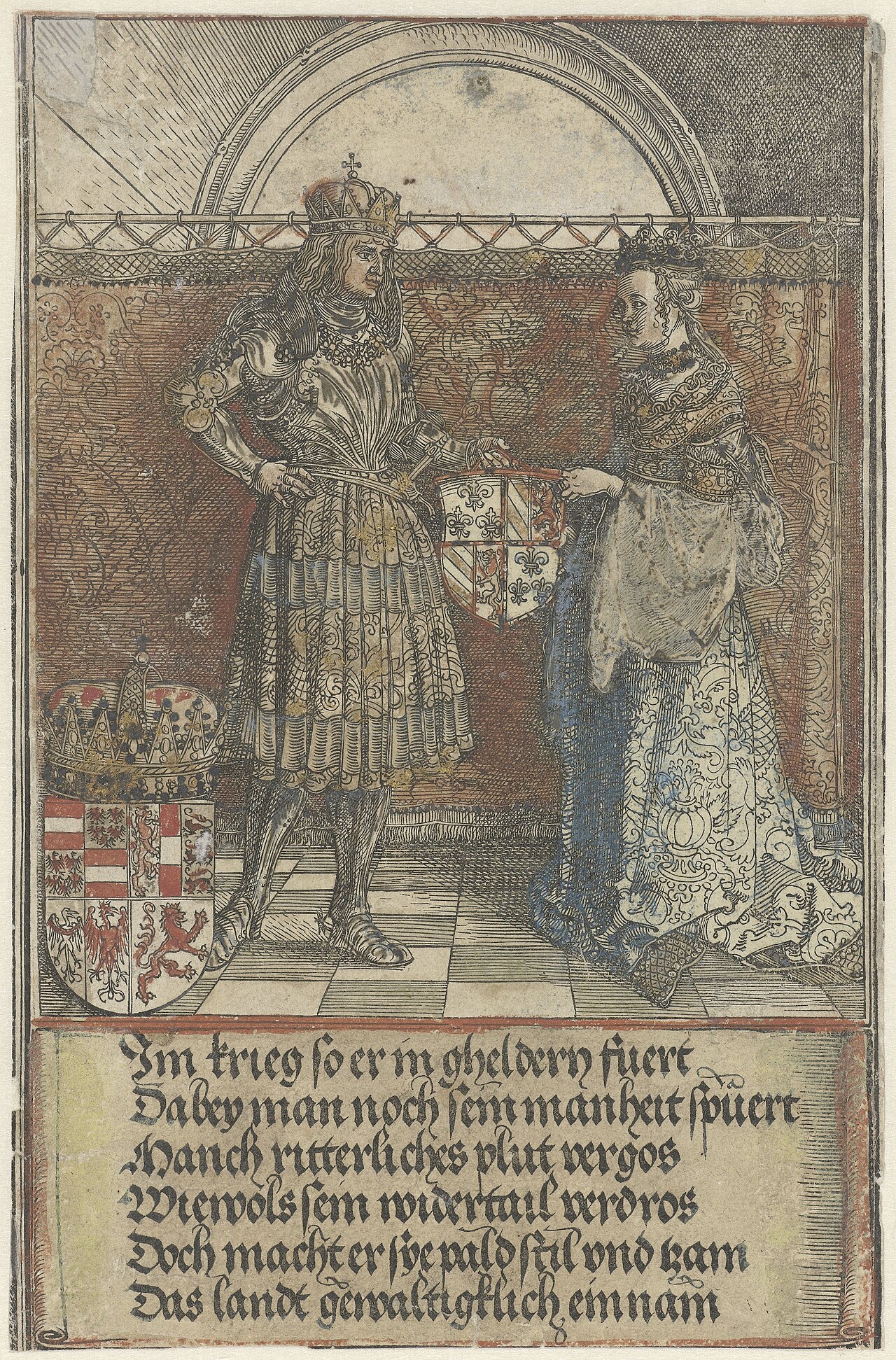
“Let others wage war. You, happy Austria, marry.”
Bella gerant alii, tu felix Austria nube.
It is the neatest summary of a dynasty ever written: while everybody else was spending themselves into ruin on armies, this family simply arranged good marriages and let the inheritances arrive.
And it very nearly worked out that way. Maximilian I married Mary of Burgundy in 1477 and gained the Low Countries. He then arranged his grandchildren's marriages so effectively that by 1519 his grandson Charles ruled Spain, the Netherlands, Austria, much of Italy and a still-growing empire across the Atlantic.
What actually happened?
The marriages were real and they were shrewd. But the inheritances landed on Charles because of a run of early deaths nobody could have planned — and this family fought a very great many wars regardless, before, during and after.
Historians now read the verse as an elegant simplification of a strategy that depended heavily on luck and on force as well as on matchmaking.
It is quoted here anyway, because it is a marvellous line and because the family has been happily repeating it for four hundred years without checking.
Where this comes from: the verse is genuinely early and genuinely famous; the modern assessment of it as simplification is the standard one.
Burgos · 25 September 1506
The glass of cold water
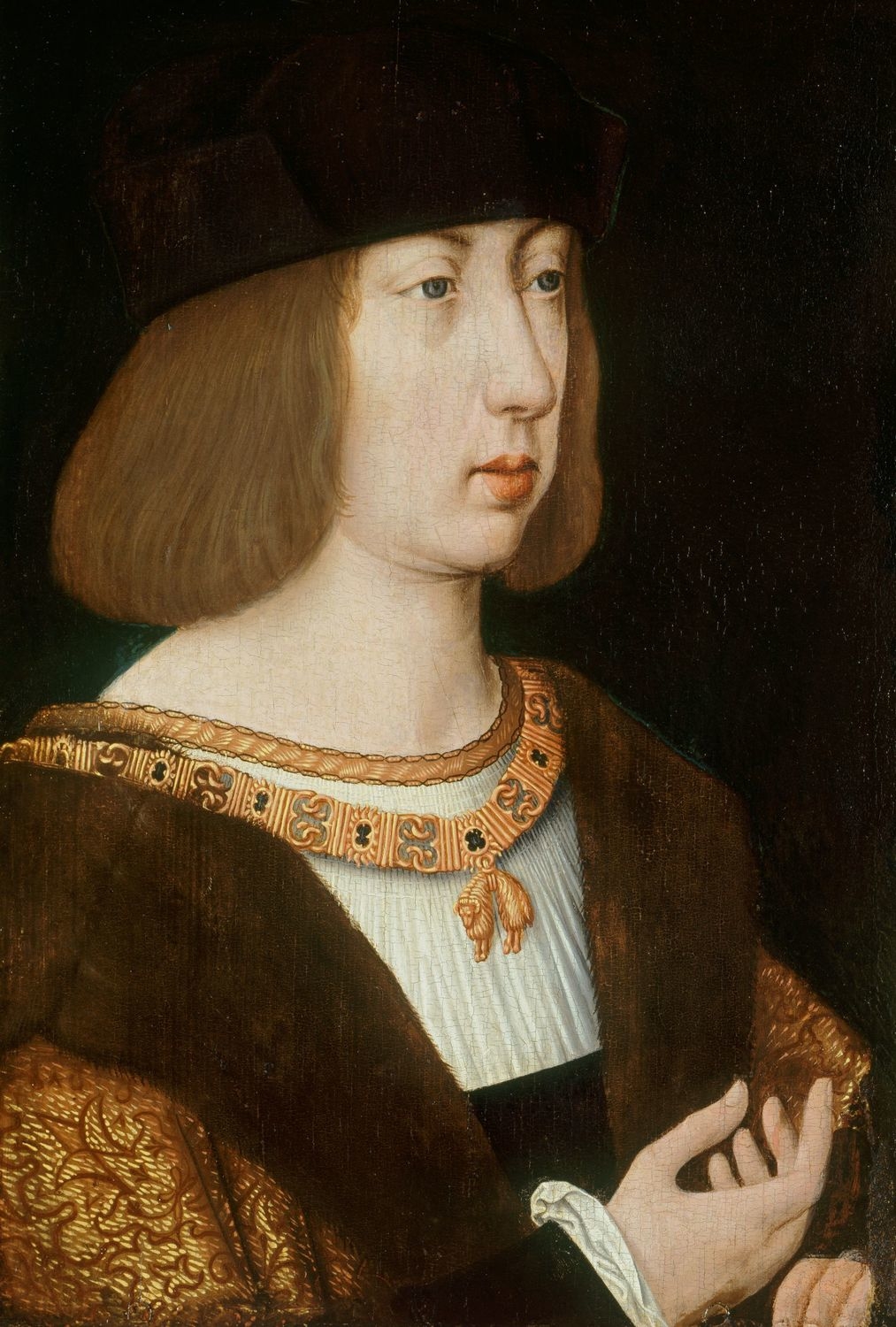
Philip the Handsome was twenty-eight, and by every account in magnificent health. He played a hard game of pelota, came off the court overheated, and drank a great draught of cold water.
He was dead within days.
What actually happened?
The medically favoured explanation is an infectious fever — typhoid or plague — and plague was active in Burgos in 1505 and 1506. His modern biographer favours plague.
The poisoning rumour started immediately, for the obvious reason: Ferdinand of Aragon was the political beneficiary of his son-in-law's death, and everybody could see it. Philip's own physician heard the rumours at the time and dismissed them. Nothing has substantiated them since.
The cold water survives because it is the kind of detail that sounds like an eyewitness. It may even have happened. It just did not cause anything.
Where this comes from: Jean-Marie Cauchies, Philippe le Beau (Brepols, 2003), and the contemporary testimony of Philip's physician Luigi Marliano.
Castile · 1506 to 1555
Juana the Mad
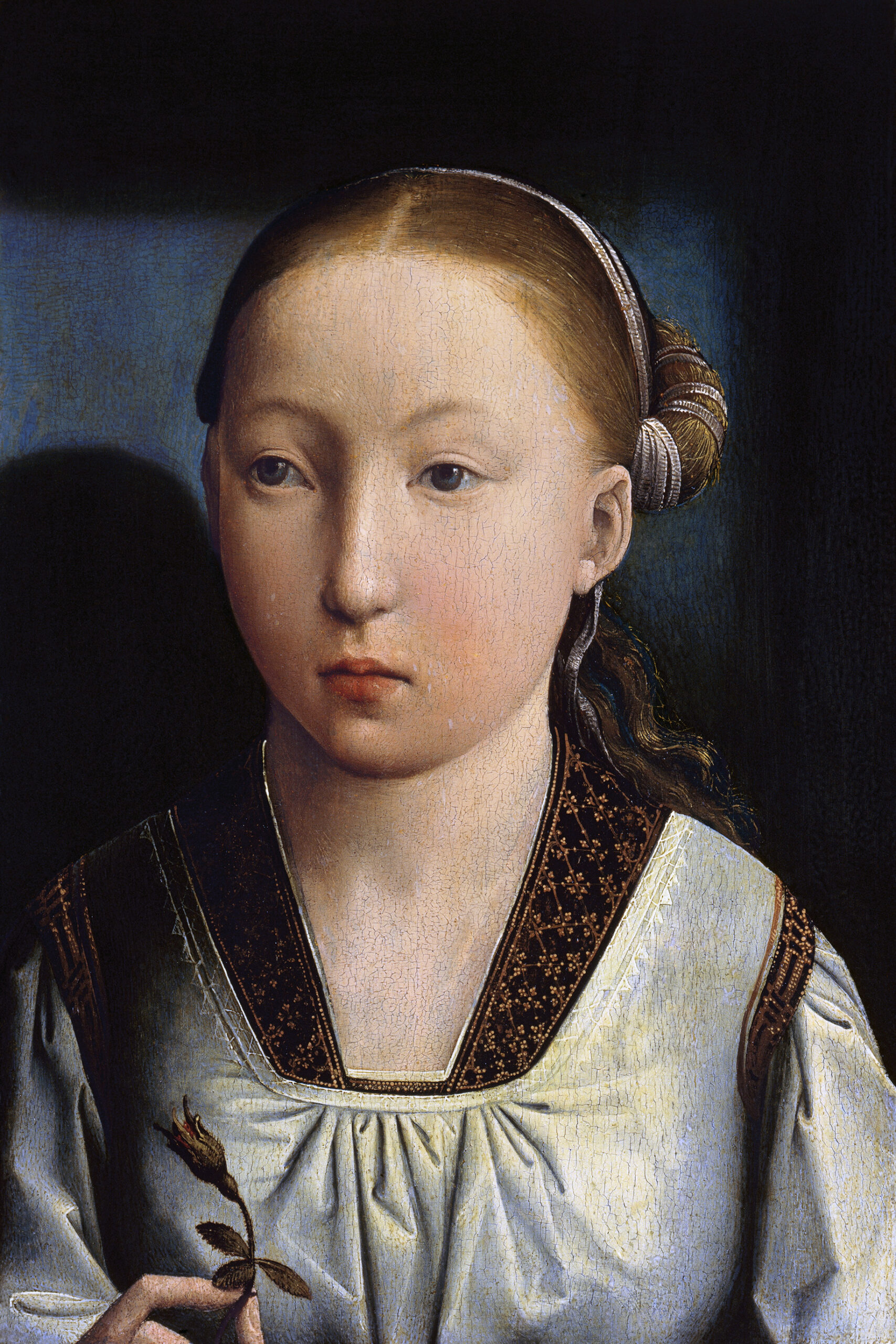
She is the one everybody knows. The queen who loved her husband so violently that when he died she would not let him be buried — who had the coffin carried across Castile through the winter nights, opening it to look at him, refusing to let any woman near it.
And who was shut away at Tordesillas for forty-six years, mad, while her father, her husband and finally her son ruled in her name.
What actually happened?
The modern archival work on Juana — drawing on the Burgundian records in Brussels, Ghent and Lille — argues that her incapacity was substantially a political construction. Her father Ferdinand, her husband Philip and her son Charles each ruled in her name, and each of them needed her to be incapable.
On the famous coffin: only one chronicler describes her opening it. And the reading that fits the evidence is not morbid obsession but dynastic anxiety — confirming that the body was still present, on a journey whose entire purpose was to get it to Granada for burial.
The image everybody carries is largely a creation of the nineteenth century: Pradilla's enormous painting of 1877, a hit play, and the films that followed it.
There is no modern clinical verdict, and the honest position is that there cannot be one. What the archives support is a woman who was sane enough to be a threat, and was neutralised.
Where this comes from: Bethany Aram, Juana the Mad: Sovereignty and Dynasty in Renaissance Europe (Johns Hopkins University Press, 2005).
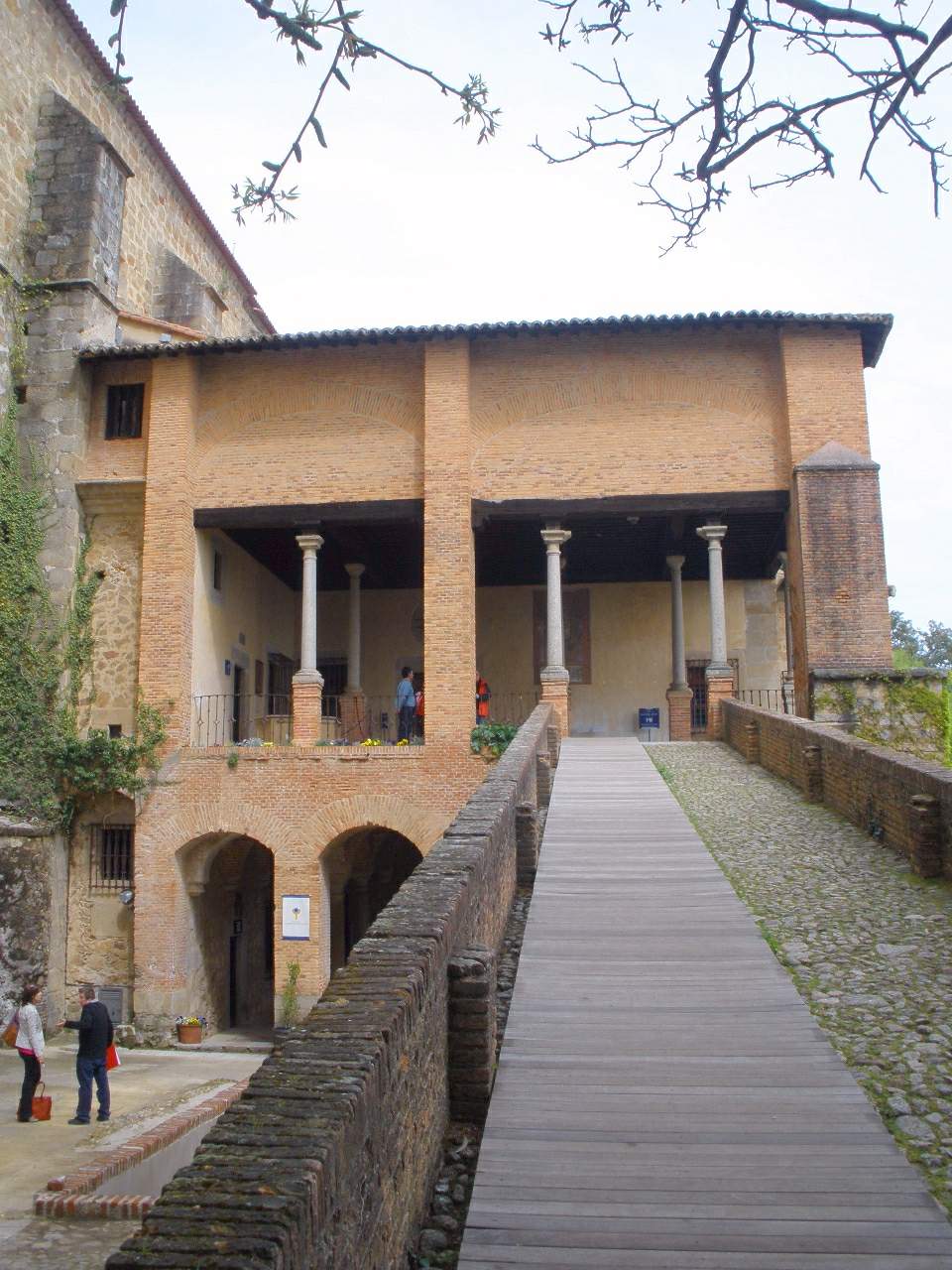
Yuste, Extremadura · 1558
The emperor who attended his own funeral
Charles V had given away the greatest inheritance in Europe and retired to a monastery in Extremadura with his clocks. And there, in the last weeks of his life, he is said to have staged the strangest scene in the family's history.
He ordered his own funeral. The catafalque was built, the candles lit, the household put into mourning, the requiem sung — and the emperor lay in the coffin and heard his own burial service read over him.
What actually happened?
A requiem mass genuinely was held, with a catafalque, as for the dead, and the household genuinely was in mourning. That much is documented.
The theatrical part — the emperor lying in the box — is not. The modern study of the Yuste and Brussels ceremonies concludes there was no such performance.
The lurid version comes from one Hieronymite prior, and it was already being doubted in the sixteenth century by a chronicler who knew the house. It reached the English-speaking world in the nineteenth century, and it has never left.
A note this site owes the reader. One of the books that carried the story furthest was written by William Stirling-Maxwell — the same scholar whose enormous life of Don John of Austria is the backbone of this website's research. Being right about one thing and wrong about another is the ordinary condition of everybody who writes history, including whoever is writing this.
Where this comes from: F. J. Campos y Fernández de Sevilla, “Exequias privadas y funerales de Estado por Carlos I/V: Yuste y Bruselas (1558)”, Boletín de Arte 22 (2001).
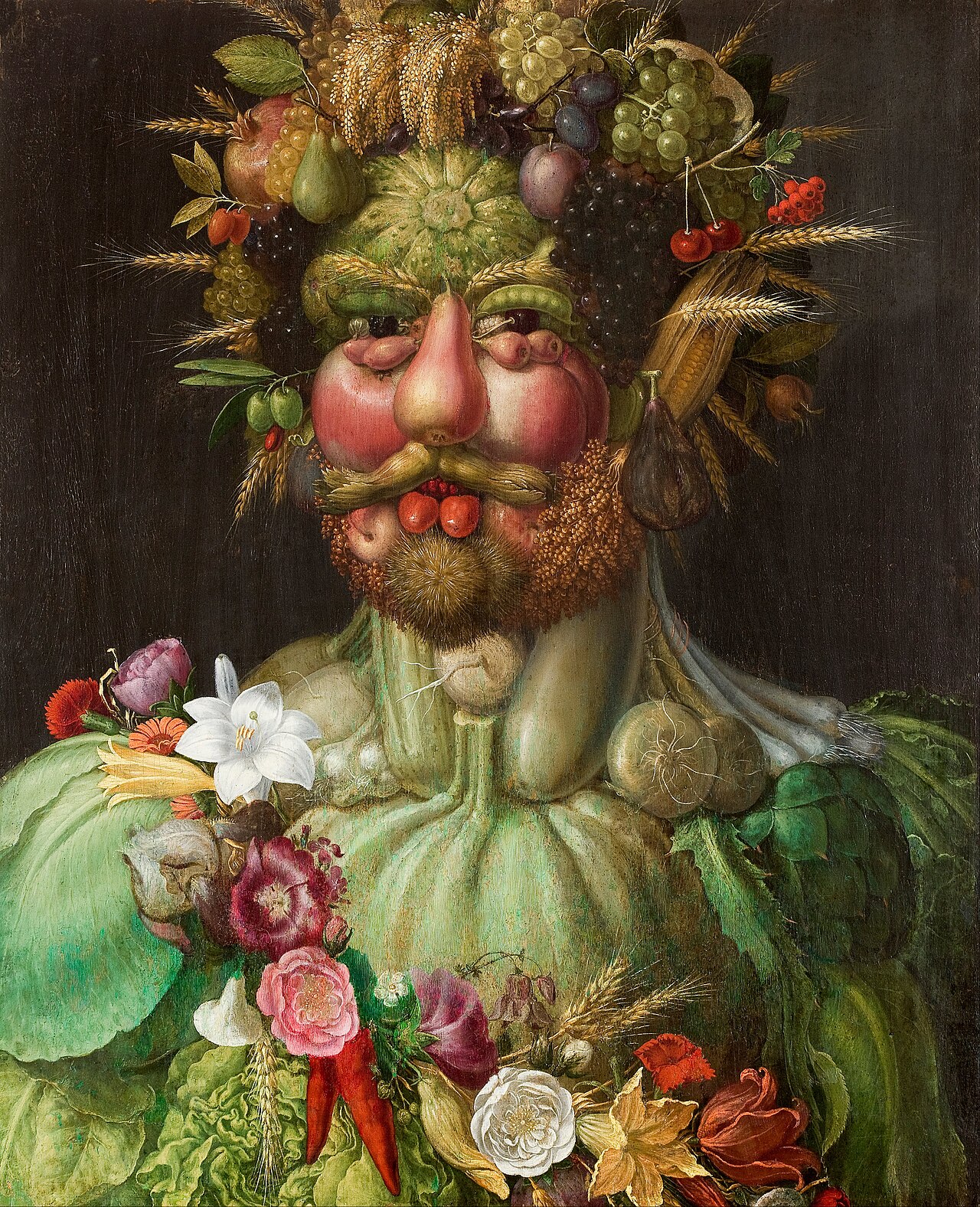
Prague · January 1612
The emperor and the lion who died together
Rudolf II kept a menagerie at Prague, and in it a lion he was fond of. Tycho Brahe, so the story goes, cast the horoscopes of both and found the same fate written in each: the emperor and the animal were bound together, and one would not outlive the other.
The lion died in January 1612. Rudolf died a few days later.
What actually happened?
The court is real and the menagerie is real — there are documented compensation payments to people the animals attacked, which tells you something about how it was run. Rudolf's patronage of Tycho Brahe and Kepler is real, and so are the alchemists.
The shared horoscope is not documented anywhere contemporary. It is a good story that has been repeated for four centuries, and nobody has produced the source.
One small correction while we are here, because it circulates everywhere: the lion was not called Ottakar. The sources that name him at all call him Oskar, or Mohamed. Ottakar appears to be somebody's slip, endlessly copied.
Where this comes from: R. J. W. Evans, Rudolf II and His World (Oxford, 1973) for the court; the horoscope legend is traced in the popular literature and rests on nothing earlier.
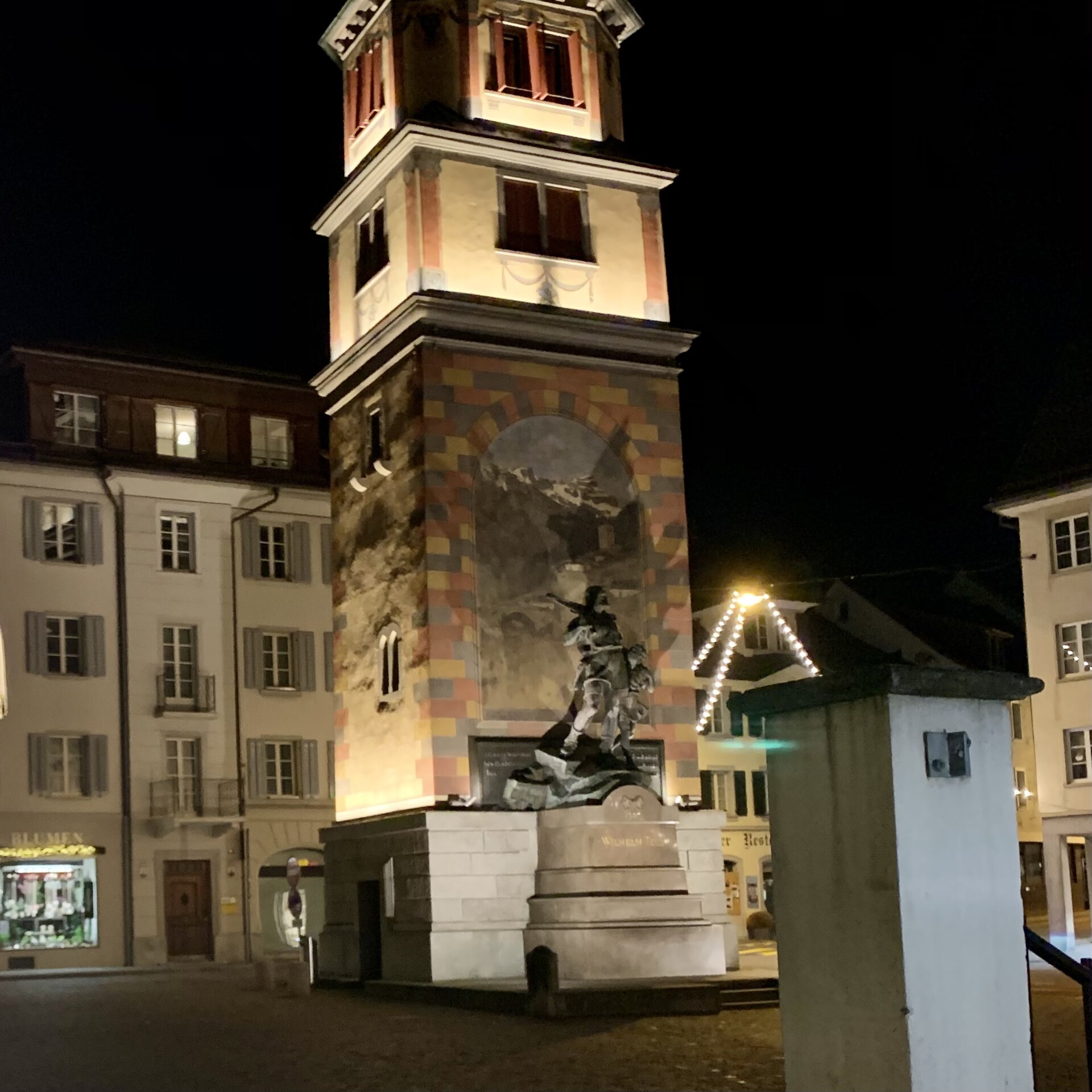
The Swiss Confederation · a story about us
William Tell and the cruel bailiff
Everybody knows this one, and in it this family are the villains.
A Habsburg bailiff sets his hat on a pole in the square at Altdorf and requires every passing man to bow to it. A hunter named Tell refuses, and is made to shoot an apple from his own son's head. He does it — and then tells the bailiff that the second arrow, the one he had tucked into his jerkin, had been meant for him if the boy had died.
And on a meadow called the Rütli, three men from three valleys swear an oath against this family, and Switzerland begins.
What actually happened?
The earliest telling anyone has found is in the White Book of Sarnen, written around 1470. The cruel-bailiff framing hardened into national history in the nineteenth century, when Switzerland needed it.
Swiss scholarship itself moved on long ago from the arch-enemy version to something plainer: a long struggle for supremacy between the Confederate towns and this family, which this family lost. Morgarten in 1315, Sempach in 1386 where Duke Leopold III was killed in the field, Näfels in 1388, and in 1415 the Aargau itself — gone within a fortnight. The claims were formally given up in 1474 and were never pursued again.
We have no quarrel with the Swiss about any of this. It is their founding story, it belongs to them, and a family does not get to edit somebody else's national myth because it comes off badly in it. We note only what the sources say, and when they start saying it.
The family's oldest ground is Swiss ground. It is beautifully kept, and anyone can walk up to it.
Where this comes from: the White Book of Sarnen, c. 1470; and the modern Swiss historiography of the Confederation's origins.
Why the marks are there. Not to spoil anything. A story you are told
is true and later discover is not leaves you trusting nothing on the page; a story told properly,
with its provenance beside it, leaves you free to enjoy it and to know exactly what you are
enjoying. Every one of these is worth reading whatever its grade — and the two graded
B are, as it happens, the two best stories here.
The genetics — the jaw, and the figure that never gets quoted alongside it — have
a page of their own.